


Best Organic Cotton Pads | Plastic-Free Period Care India
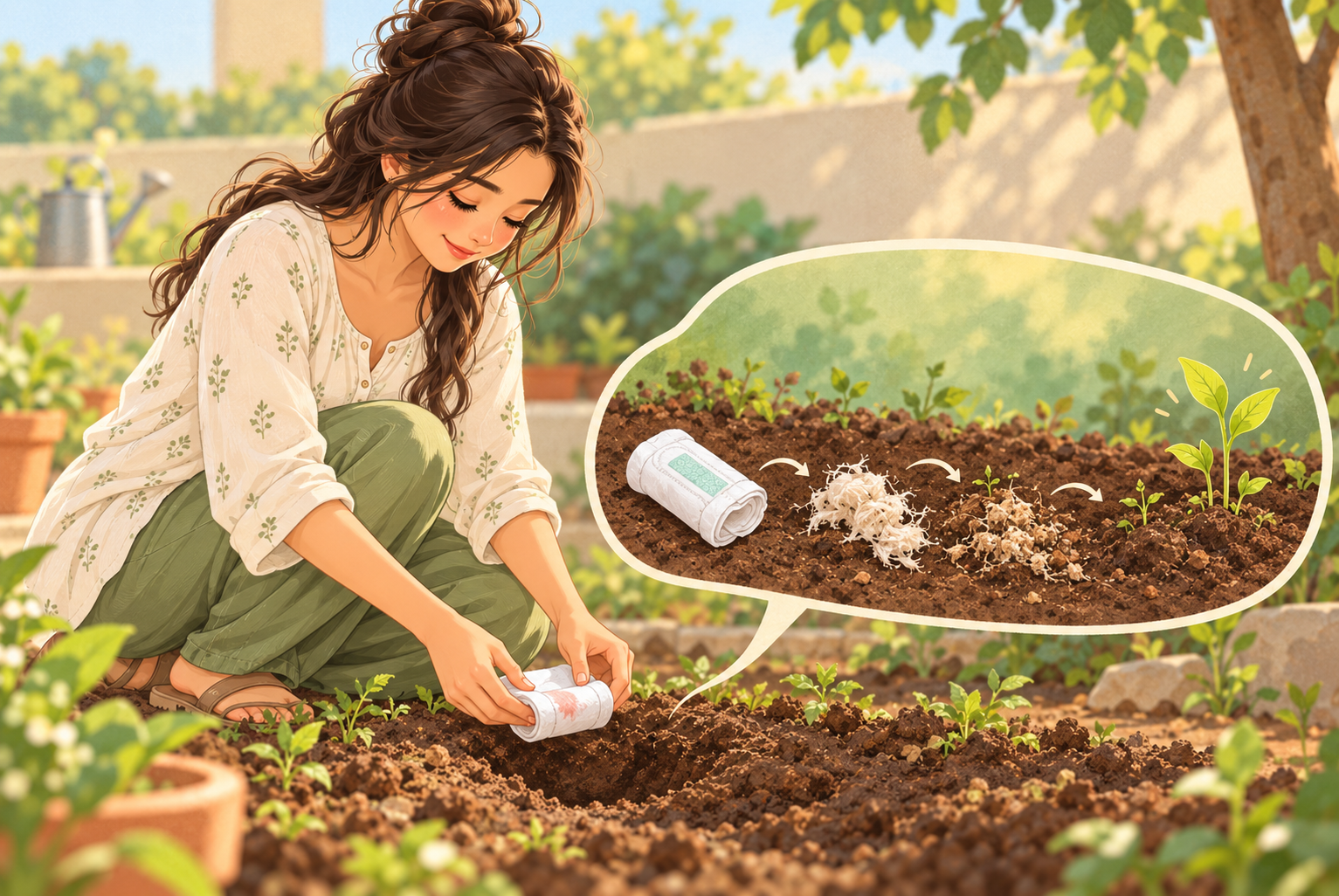
Here's a thought that stopped me mid-scroll one evening: the very first disposable pad I ever used — somewhere around my early teens — still exists. Somewhere in a landfill, probably in the same district I grew up in, it's sitting exactly where it was thrown, because conventional sanitary pads are largely plastic, and plastic doesn't politely disappear.
If you've ever felt a small pinch of guilt while wrapping up a used pad — but also felt overwhelmed by every "zero-waste period" post telling you to buy a cup, cloth pads, and period underwear all at once — this guide is for you. No shame, no pressure to overhaul your entire routine. Just a realistic, India-specific look at what actually reduces period plastic, and the one switch almost anyone can make this cycle without changing a single habit.
The Problem Nobody Wraps in Newspaper
India's menstrual waste problem is enormous and mostly invisible. A widely cited study by the environmental NGO Toxics Link estimated that roughly 12.3 billion sanitary napkins — about 113,000 tonnes of waste — reach Indian landfills every year, and that commonly available pads are around 90 per cent plastic. That plastic — polypropylene layers, polyethylene back sheets, and superabsorbent polymer gels — can persist in soil for centuries and slowly break down into microplastics. As the UN Environment Programme (UNEP) puts it, plastic doesn't biodegrade — it chokes ecosystems, damages soil, and works its way into water and food chains.
There's a human side too. Because most of us don't segregate menstrual waste, sanitation workers often end up separating used pads from household garbage by hand. India's official waste management guidelines (CPCB) already ask us to segregate plastic waste and wrap sanitary waste securely before disposal — a small habit that protects real people, not just the planet.
And here's the encouraging part: in the same Toxics Link survey, 88 per cent of respondents said they wanted to switch to environmentally friendlier options — they just found them hard to access or confusing to choose. That's exactly the gap this guide tries to close.
The Plastic-Free Spectrum — and Where to Realistically Start
"Plastic-free periods" is usually pictured as menstrual cups, cloth pads, and period underwear — and it's worth knowing these exist, because for the right person they're genuinely excellent. A large research review published in The Lancet Public Health found menstrual cups safe and effective for most users. Reusable cloth pads and period underwear cut single-use waste to almost zero too — if you have private space to wash and sun-dry them, reliable water access, and the comfort with insertion or hand-washing that they require.
But that "if" is exactly where most Indian households fall through the cracks. Many of us share bathrooms with family, water supply can be unreliable, hostel life leaves little privacy, and in many households periods still aren't openly discussed — so boiling a menstrual cup in a shared kitchen may raise questions you're not ready to answer. These aren't small obstacles, and pretending otherwise is how well-meaning sustainability advice ends up gathering dust in a drawer.
A switch you can actually maintain beats a perfect one you abandon in two cycles. Global health bodies like the World Health Organization (WHO) stress that good menstrual health means products that are safe, acceptable, and affordable for your situation — so instead of asking you to overhaul your entire routine overnight, this guide focuses on the one switch almost anyone can make this cycle, with zero change in habit: moving from a conventional plastic-based pad to an organic cotton one.
Why Organic Cotton Pads Are the Realistic First Step
Conventional disposable pads are built from polypropylene top sheets, polyethylene back sheets, and superabsorbent polymer gel — roughly 90 per cent plastic by composition. Organic cotton pads replace the layer that touches your skin with certified organic cotton, and increasingly use plant-based or lower-plastic materials elsewhere in the pad, without asking you to change a single habit. You still open a wrapper, stick, wear, and dispose — the same way you always have.
Skin comfort is the other half of the story. Plastic top sheets trap heat and moisture against the skin for hours, which is a well-documented contributor to period rashes and irritation, especially in India's climate. A breathable, cotton top sheet lets skin breathe the way plastic simply can't — which is often the difference between a comfortable day 2 of your period and a miserable one.
Some brands take this a step further at the absorbent core itself. Femi9's organic pads, for example, pair the organic cotton top sheet with an absorbent layer infused with aloe vera and corn extracts — ingredients chosen for their natural soothing and moisture-handling properties — so the comfort benefit isn't limited to the surface you touch, but built into the layer doing the actual work.
And the honest caveat, because this guide doesn't do hype:
An organic cotton pad is not a zero-waste product. It still needs to be wrapped and disposed of properly, and "organic" refers to the cotton layer, not a guarantee that the whole pad vanishes overnight. What it genuinely offers is a meaningfully lower-plastic, skin-kinder disposable — the most realistic upgrade for anyone who isn't ready (or able) to switch to cups, cloth, or period underwear.
Biodegradable & Organic Cotton Pads — The Easiest Way
If reusables feel like too big a leap right now, this is your on-ramp: disposable pads made with organic cotton top sheets and plant-based or compostable materials instead of conventional plastic layers. You change nothing about your routine — same habit, same convenience — while cutting down the plastic in each pad. Many users with sensitive skin also find cotton-based pads gentler, since plastic top layers trap heat and moisture, a known contributor to period rashes.
One caveat worth knowing: "biodegradable" doesn't mean a pad vanishes in a week, and it still needs proper disposal. Look for brands that are transparent about materials rather than those that just print green leaves on the packet.
Common Mistakes to Avoid
• Assuming "organic" means "disposable-free." It's a lower-plastic, skin-friendlier version of the pad you already use — not a cup or cloth-pad replacement. Both approaches are valid; they're just different tools.
• Switching your entire cycle's supply on day one. Trial on light-flow days first so a leak doesn't put you off the switch entirely.
• Falling for greenwashing. "Herbal", "natural", and pastel packaging mean nothing by themselves. Check whether the brand is specific about the cotton top sheet and materials, not just the marketing.
• Flushing anything. No pad — organic or conventional — belongs in a toilet. It clogs sewage lines and ends up in water bodies.
• Ignoring persistent skin reactions. A gentler top sheet helps most people, but ongoing rashes or irritation need a doctor's opinion, not just a product change.
Expert-Backed Tips for a Smoother Transition
• Good menstrual hygiene habits matter as much as what the pad is made of.
• Keep a small "transition kit" in your bag — one familiar pad and one organic cotton pad — until you're confident in the new one.
• If you have a very heavy flow, painful periods, or skin reactions that don't settle after switching, speak to a gynaecologist — no product choice replaces medical advice.
• If you're ever curious about cups or cloth pads down the line, that's a separate, bigger decision — this guide's focus is the switch that's realistic for almost everyone, right now.
Frequently Asked Questions
1. What makes a pad "organic cotton" instead of a regular pad?
The top sheet — the layer against your skin — is made of certified organic cotton instead of polypropylene plastic. Depending on the brand, other layers may also use plant-based or lower-plastic materials, but the core difference is what touches your skin.
2. Are organic cotton pads as absorbent as regular pads?
Good organic cotton pads are engineered with an absorbent core built specifically for the job — the change is mainly in the top sheet and outer materials, not the core's ability to lock away flow, so leak protection should feel comparable when you pick the right size for your flow. Femi9's organic pads, for instance, use an absorbent layer infused with aloe vera and corn extracts — chosen for their natural soothing and absorbency-supporting properties — alongside the organic cotton top sheet, so you get comfort and protection working together rather than one at the cost of the other.
3. How do I dispose of sanitary pads responsibly?
Wrap the used pad securely in its cover or newspaper, mark it if your city uses a marking system for sanitary waste, and place it in dry/domestic hazardous waste — never flush it, and never mix it loosely with kitchen waste.
4. Do organic cotton pads really help with rashes?
Many users with sensitive skin find them gentler, since a breathable cotton top sheet traps less heat and moisture than plastic — a known contributor to period rashes. If irritation persists regardless of pad type, it's worth checking with a doctor.
5. What's the easiest way to start reducing period plastic?
Fix your disposal habits first — that's free and immediate. Then simply swap your next pack of regular pads for an organic cotton pack in the same size you already use. No new routine to learn, no equipment to buy.
Final Thoughts: Progress, Not Perfection
Every pad you keep out of a landfill matters. Every properly wrapped one protects a waste worker's dignity. You don't need to become a zero-waste influencer overnight, and you definitely don't need every product on the eco-shelf — you just need one honest, doable next step, this cycle.
This is exactly why organic cotton pads made this list as the recommended starting point — Femi9's organic sanitary pads are cotton-soft, rash-conscious, and available in multiple sizes, from a brand whose whole philosophy is "care for your period, care for our Earth." You don't need a new routine, a learning curve, or any equipment — just your next pack. You can read more about their approach on the Femi9 blog.
Your period doesn't have to cost the Earth. Start where you are, with what you can manage — that's the only starter plan that actually works.
References (all linked contextually within the article)
• WHO — Menstrual Health: https://www.who.int/health-topics/menstrual-health
• The Lancet Public Health — Menstrual Cup Safety Review: https://www.thelancet.com/journals/lanpub/article/PIIS2468-2667(19)30111-2/fulltext
• Toxics Link — India's Menstrual Waste Report (via Down To Earth): https://www.downtoearth.org.in/waste/india-s-landfills-add-113k-tonnes-of-menstrual-waste-each-year-report-77247
• UNEP — Plastic Pollution: https://www.unep.org/plastic-pollution
• CPCB (Govt. of India) — Guidelines for Segregation, Collection & Disposal of Plastic Waste: https://cpcb.nic.in/uploads/plasticwaste/consolidate_guidelines_for_disposal_of_pw.pdf