

Are Cotton Sanitary Pads Worth Switching To?
|
IN THIS ARTICLE 01 / What are cotton sanitary pads? 02 / Why women are turning away from conventional pads 03 / The case for cotton pads (and where it falls short) |
04 / What Femi9 pads are made of 05 / How to actually evaluate a pad 06 / Cotton pad FAQs |
You know the feeling. It's the middle of a long day, and there it is again — that hot, itchy, damp discomfort you've quietly learned to live with. If you've ever shifted in your seat and thought this can't be how it's supposed to feel — you're not imagining it, and you're not being fussy. Your skin is telling you something.
If you've shopped for pads lately, you've seen the shift: the wall of pastel plastic now shares shelf space with beige, earthy boxes promising "100% cotton," "organic," and "skin-friendly." But are cotton pads actually worth switching to — or is it just prettier packaging? Let's get into it, honestly.
What Are Cotton Sanitary Pads?
"Cotton pad" is a catch-all. Most fall into three buckets: conventional pads with a cottony top layer (but synthetic layers underneath), organic cottony pads (cotton grown without synthetic pesticides), and cottony-core pads that use cotton through the absorbent layer too. Cotton is real — a soft, familiar plant fibre. But "cotton" on a label doesn't tell you the whole story of whether a pad is genuinely safer or more comfortable.
Why Women Are Turning Away From Conventional Pads
Here's a fact worth sitting with: the skin around the vulva is far more delicate and absorbent than the skin on your arm — meaning whatever sits against it for hours has a much more direct route into your body. That's why the ingredients in a pad matter more than people realise. Add fragrance, chlorine-bleached materials, and a plastic top sheet that traps heat and moisture, and you have the exact recipe behind the itching and rashes so many women silently endure.
The Case for Cotton Pads (and Where It Falls Short)
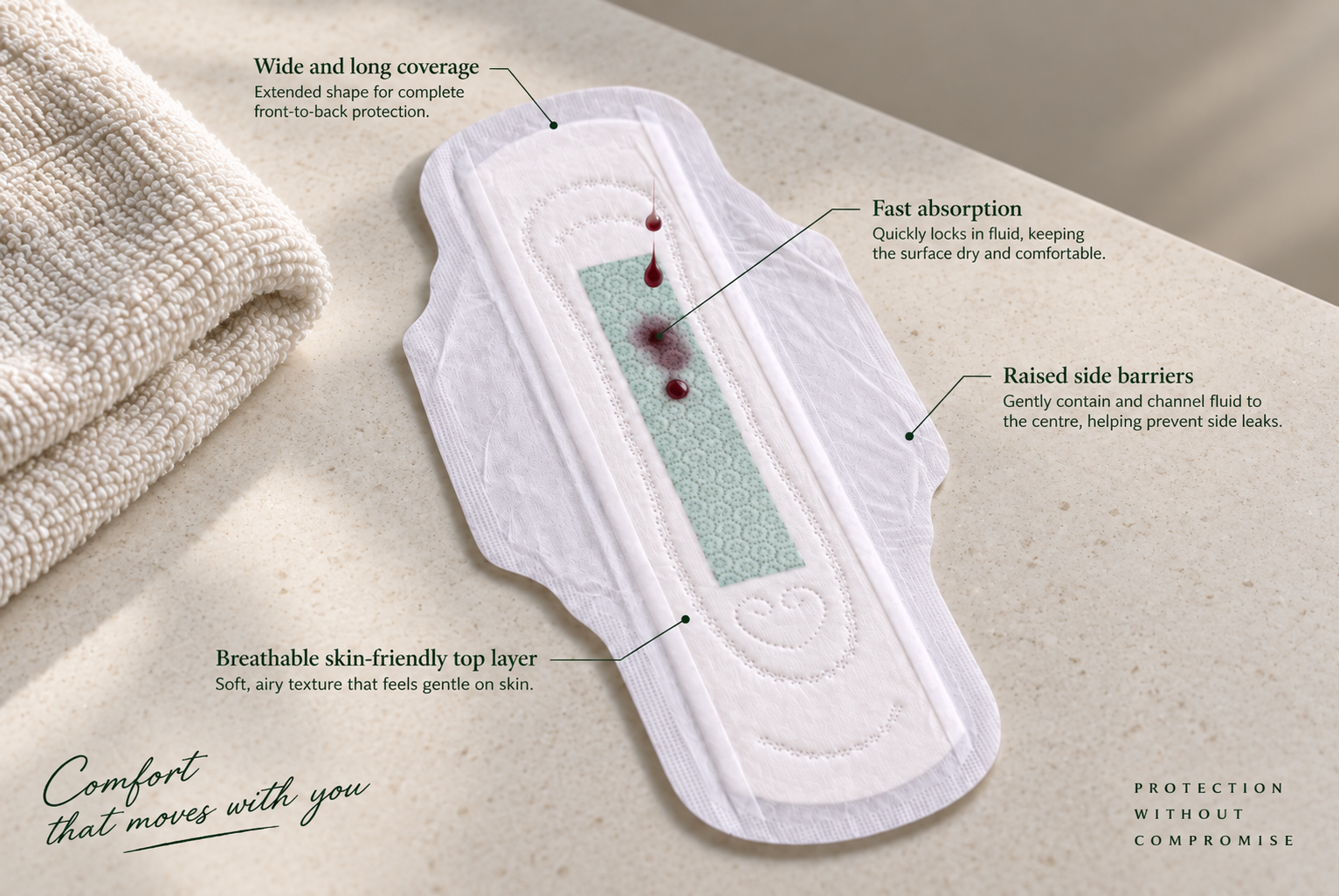
What cotton does well: A breathable cotton top sheet lets your skin breathe in a way plastic simply can't — less trapped heat, less clinging moisture, and for sensitive skin, noticeably less irritation. Switching from a fragranced, plastic-topped pad to a soft, unscented organic cotton one can genuinely be the difference between dreading your period and barely thinking about it.
Where it falls short: the word "cotton" alone guarantees nothing. Conventional cotton is one of the most chemically-intensive crops on the planet, so unless it's certified organic, it can still carry a pesticide load. And cotton holds moisture in its fibres, so a poorly-designed cotton pad can feel damp against your skin — and trapped moisture and heat are themselves major causes of rashes. The real question isn't "is it cotton?" It's "what's in the whole pad, and does it keep me dry and comfortable?"
What Femi9 Pads Are Made Of
This is exactly the gap Femi9's organic cotton pads were built to close — made for comfort, designed for real life, built to move with you:
• A cotton-soft top sheet — gentle against your skin for comfortable wear all day.
• A breathable design — airflow-friendly layers reduce heat and keep you feeling fresh.
• A rash-free promise — made without harsh chemicals, fragrance, chlorine, or unwanted additives.
• Thoughtful odour control — so you feel fresh and confident, not self-conscious.
How to Actually Evaluate a Pad
Look past the word "cotton" and check for these instead:
• Fragrance- and chemical-free — the additives most linked to irritation.
• A breathable, moisture-wicking top layer — what happens to the moisture matters more than what the cover is called.
• Real absorbency that keeps you dry — dryness, not just "natural," is what prevents rashes.
• The right size for your flow — comfort and leak protection both depend on fit.
So — are cotton sanitary pads worth switching to? If your current pad leaves you itchy, sweaty, or sore, then honestly, yes. Not because "cotton" is a magic word, but because breathable, chemical-free comfort against your most sensitive skin isn't a luxury — it's something you deserve every single day of your period. You can read more on the Femi9 blog.
Cotton Pad FAQs
Are organic cotton pads better than regular pads?
Generally yes — if "regular" means fragranced, conventional pads with synthetic blends. Organic cotton avoids synthetic pesticide residue and usually skips fragrance and dyes. But organic cotton alone doesn't guarantee dryness or absorbency — the whole pad's design matters.
Do cotton pads really prevent rashes?
They help by reducing trapped heat and irritating additives — but staying dry matters just as much. Look for a pad that's both breathable and genuinely absorbent. If irritation persists regardless of the pad, see a doctor.
Are cotton pads as absorbent as regular pads?
A well-designed organic cotton pad pairs a gentle top sheet with a proper absorbent core, so leak protection is comparable when you choose the right size — the difference is gentler materials, not weaker performance.
Your comfort isn't a small thing — it's your everyday wellbeing. Choosing a pad that cares for your skin is one simple way to care for yourself.
References & Further Reading
• New York Times (Wirecutter) — PFAS in Period Products: https://www.nytimes.com/wirecutter/blog/forever-chemicals-in-period-incontinence-products/
• Science of the Total Environment — VOCs in Feminine Hygiene Products: https://www.sciencedirect.com/science/article/pii/S0160412020303494
• Natracare / WEN — Pesticides in Menstrual Products Study: https://www.natracare.com/blog/tampon-study-shows-toxic-pesticides/
• Healthline — Rashes From Pads: https://www.healthline.com/health/rashes-from-pads
• GOTS — Global Organic Textile Standard: https://global-standard.org/
• World Health Organization — Menstrual Health: https://www.who.int/health-topics/menstrual-health