Every eight minutes, a woman in India dies of cervical cancer — a disease that, in most cases, is preventable. In February 2026, the Government of India took its biggest step yet against this reality, launching a nationwide programme to vaccinate 14-year-old girls against the Human Papillomavirus (HPV), free of cost.
For Indian parents and young women, this raises a lot of practical questions: What exactly is the HPV vaccine? Is it safe? Which brand should you choose if you're paying privately — Cervavac or Gardasil? And what's the right HPV vaccine age for a daughter, or for yourself? This guide answers all of it in plain language, based on current government and medical guidance.
What Is HPV, and Why Does It Matter?
HPV, or Human Papillomavirus, is an extremely common infection spread mainly through skin-to-skin and sexual contact. Most sexually active people — men and women — come into contact with some type of HPV at some point in their lives, and in most cases, the body's immune system clears the infection on its own within a year or two, often without the person ever knowing they were infected.
The concern is with a small group of "high-risk" HPV types, especially HPV 16 and HPV 18. When these strains cause a persistent infection that isn't cleared naturally, they can trigger abnormal cell changes in the cervix. Left unchecked over 10 to 15 years, these changes can develop into cervical cancer. HPV 16 and 18 alone are responsible for roughly 70–83% of cervical cancer cases in India — which is exactly why vaccines built around these two strains offer such strong protection.
Cervical Cancer in India: The Numbers Every Family Should Know
Cervical cancer is the second most common cancer among women in India, according to the Indian Council of Medical Research's National Institute of Cancer Prevention and Research (ICMR-NICPR). Put simply: roughly one woman in India dies of cervical cancer every eight minutes.
What makes this especially painful is that cervical cancer is one of the most preventable cancers in medicine, through a combination of HPV vaccination in adolescence and regular screening in adulthood. Yet national screening coverage in India remains low, and many women are diagnosed only after the disease has advanced. This is precisely the gap that the HPV vaccine — and now, India's national vaccination programme — is designed to close.
What Is the HPV Vaccine, and How Does It Work?
The HPV vaccine is a preventive (prophylactic) vaccine — it trains the immune system to recognise and fight off specific HPV strains before they ever cause an infection. It works best when given before a person is exposed to the virus, which is why doctors recommend it for pre-teens and young adolescents rather than waiting until adulthood.
It's worth understanding what the vaccine doesn't do: it cannot treat an HPV infection someone already has, and it doesn't cover every single HPV strain that can cause cancer. That's why the HPV vaccine is best described as one half of a two-part cervical cancer prevention strategy — the other half being regular screening (Pap smear or HPV DNA testing) later in life.
HPV Vaccines Available in India
Four HPV vaccines are currently available in the Indian market. They differ mainly in how many HPV strains they cover and their price.
Vaccine | HPV strains covered | Recommended age | Doses needed | Approx. private price* |
Cervavac (Serum Institute of India) | 6, 11, 16, 18 (quadrivalent) | 9–45 yrs (govt programme: girls aged 14) | 2 doses (9–14 yrs) / 3 doses (15+ yrs) | ₹2,000–2,500 / dose |
Gardasil | 6, 11, 16, 18 (quadrivalent) | 9–45 yrs | 2 doses (9–14 yrs) / 3 doses (15+ yrs) | ₹3,000–4,000 / dose |
Gardasil 9 | 6, 11, 16, 18, 31, 33, 45, 52, 58 (nine-valent) | 9–45 yrs | 2 doses (9–14 yrs) / 3 doses (15+ yrs) | ₹9,000–11,000 / dose |
Cervarix | 16, 18 (bivalent) | 9–25 yrs | 2–3 doses depending on age | ₹2,500–4,000 / dose |
*Private-market prices vary by city, hospital, and clinic, and usually also include a consultation fee — always confirm the current price directly with the clinic. Under India's National HPV Vaccination Programme, eligible 14-year-old girls receive Gardasil-4 completely free at government health facilities.
Cervavac is India's first indigenously developed HPV vaccine, created by the Serum Institute of India and evaluated in Indian population studies before approval by the Drug Controller General of India. In terms of the strains it protects against, it is considered comparable to Gardasil — for most families, the practical difference is price, not protection.
What Is the Right Age for the HPV Vaccine?
Both the World Health Organization (WHO) and the Indian Academy of Pediatrics (IAP) recommend 9 to 14 years as the ideal window for HPV vaccination, ideally before a girl becomes sexually active, when the immune response to the vaccine is strongest.
Ages 9–14: One or two doses are usually sufficient.
Ages 15–45: Three doses are recommended, spaced over roughly six months.
Boys: HPV vaccination is also approved for boys and young men. It isn't yet part of India's national programme, but private vaccination can lower a boy's own risk of HPV-related cancers and reduce transmission to future partners.
Beyond 26: The vaccine is licensed for use in India up to age 45. Protection tends to be lower for women who have already been exposed to HPV, but vaccination can still be worth discussing with a gynaecologist on a case-by-case basis.
The single most important factor is timing: the earlier the vaccine is given — ideally before any HPV exposure — the stronger and simpler the protection.
India's National HPV Vaccination Programme (2026): What Parents Should Know
On 28 February 2026, Prime Minister Narendra Modi launched India's first National HPV Vaccination Programme from Ajmer, Rajasthan — a milestone first signalled two years earlier, when the government announced support for HPV vaccination for girls aged 9–14 in the Union Budget 2024–25.
Here's what the programme means for Indian families:
Who is eligible: Girls aged 14 years, across every state and union territory.
Vaccine used: A single dose of the quadrivalent Gardasil-4 vaccine.
Cost: Completely free at government health facilities.
Where to get it: Ayushman Arogya Mandirs, Community Health Centres, sub-district and district hospitals, and Government Medical Colleges.
Consent: Vaccination is voluntary; a parent or guardian's informed consent is required beforehand.
Scale: The programme aims to reach approximately 1.15 crore girls every year.
Booking: Appointments can be tracked through the government's U-WIN digital immunisation platform.
The decision to use a single dose is backed by evidence: a 2022 WHO position paper found that one dose of the HPV vaccine offers protection comparable to two or three doses in adolescent girls — findings that India itself contributed data toward. With this launch, India joins more than 160 countries that already include HPV vaccination in their national immunisation schedules.
If your daughter is turning 14, it's worth asking your nearest government health facility whether she's currently eligible under the programme.
Is the HPV Vaccine Safe?
Yes. HPV vaccines are among the most extensively studied vaccines in the world, with more than 500 million doses administered globally since 2006. Large-scale safety monitoring across multiple countries has not found evidence of serious long-term side effects.
The most common reactions are mild and temporary:
Pain, redness, or swelling at the injection site (the most common side effect)
Mild headache or tiredness in some people
Occasional mild fever
These typically resolve within a day or two on their own, and no special activity restrictions are needed afterward. As with most vaccines, your doctor may ask you to wait at the clinic for about 15 minutes after the shot, purely as a standard precaution.
Common Myths About the HPV Vaccine — Busted
Myth: "The vaccine is only for girls who are already sexually active."
Fact: It's the opposite — the vaccine works best before any exposure to HPV, which is exactly why it's recommended for girls as young as 9.
Myth: "The HPV vaccine causes infertility."
Fact: There is no credible scientific evidence linking the HPV vaccine to infertility. This claim has been studied extensively and is not supported by global safety data.
Myth: "One dose can't possibly be enough."
Fact: For the 9–14 age group specifically, WHO-reviewed evidence shows a single dose provides protection comparable to multi-dose schedules — exactly why India's national programme uses one dose for 14-year-olds.
Myth: "Once vaccinated, you never need a Pap smear again."
Fact: The vaccine doesn't cover every cancer-causing HPV strain and can't treat an infection that's already present. Regular cervical screening, usually from around age 30, is still recommended even for vaccinated women.
Myth: "Only girls need to worry about HPV."
Fact: HPV affects men too and is linked to other cancers. Boys and young men can also be vaccinated, which protects them directly and reduces transmission.
Beyond the Vaccine: Everyday Habits That Support Reproductive Health
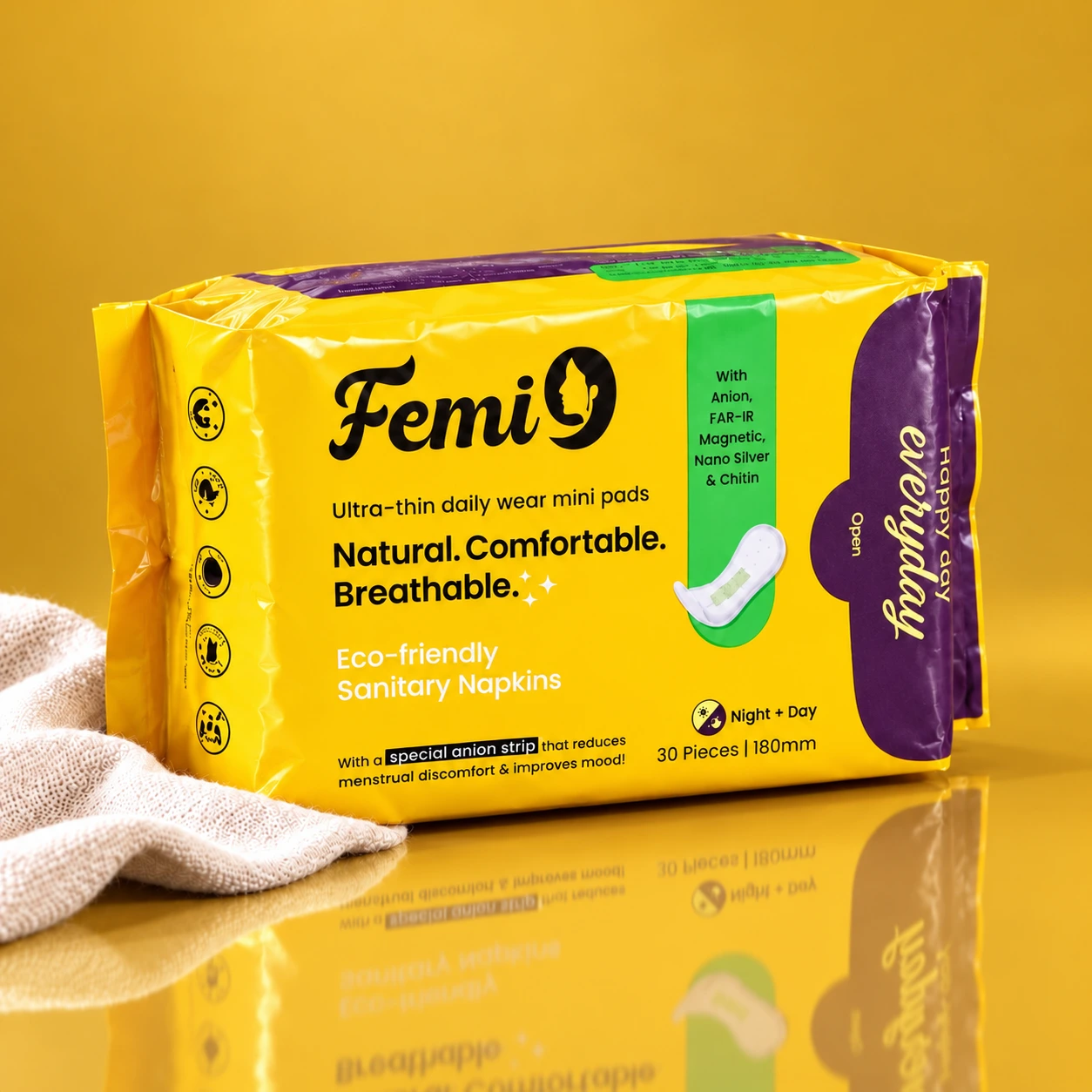
At Femi9, we think about women's health as more than just period days — it spans every stage from a girl's first period to the choices she makes as a young woman. Vaccination and screening are two vital pillars of that picture; the third is everyday menstrual hygiene, which plays its own quiet role in reducing infections and irritation.
Simple habits go a long way: changing your pad every 4–6 hours, choosing rash-free, chemical-free sanitary pads for sensitive skin, and staying informed about your own reproductive health rather than treating periods as a taboo topic at home. If you're building better menstrual hygiene habits for yourself or your daughter, our menstrual hygiene guide covers the essentials, and our organic Femi9 sanitary pads are designed for exactly this kind of everyday care.
The Bottom Line
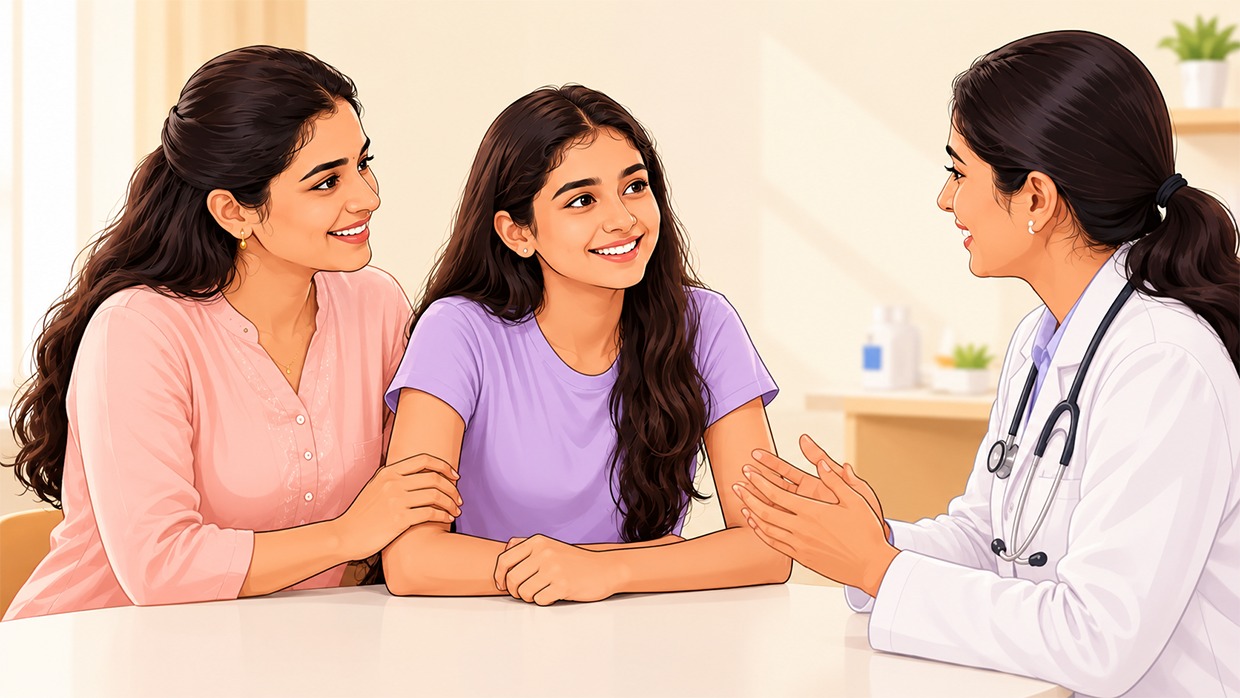
The HPV vaccine won't make headlines in most households the way a new phone launch does — but for Indian parents, it may be one of the most consequential low-cost health decisions available today. Between India's free national programme for 14-year-olds and affordable private options like Cervavac for everyone else, cost is no longer the barrier it once was. What matters most now is awareness, timing, and a conversation with your doctor.
If you're navigating this alongside other questions about periods, hygiene, and your daughter's changing body, our FAQ page and About Femi9 are good places to start.
Medical disclaimer
This article is for general awareness and educational purposes only and does not constitute medical advice. Vaccine eligibility, pricing, and government scheme details can change and may vary by state and provider. Please consult a paediatrician, gynaecologist, or your nearest government health centre for guidance specific to you or your child.
Sources
• Press Information Bureau, Government of India — National HPV Vaccination Programme launch (Feb 2026) — https://www.pib.gov.in/PressReleasePage.aspx?PRID=2234009
• ICMR – National Institute of Cancer Prevention & Research — cervical cancer statistics — https://cancerindia.org.in/statistics/
• World Health Organization — HPV vaccines overview — https://www.who.int/teams/immunization-vaccines-and-biologicals/diseases/human-papillomavirus-vaccines-(HPV)
• World Health Organization — HPV vaccines position paper, December 2022 — https://www.who.int/publications/i/item/who-wer9750-645-672
………………………………………………………………………………………………………………………………………………
Frequently asked questions
Is the HPV vaccine free in India?
Yes — under the National HPV Vaccination Programme launched in February 2026, girls aged 14 receive a single dose of the Gardasil-4 vaccine free of cost at government health facilities such as Ayushman Arogya Mandirs and district hospitals. Outside this age group or the government programme, the vaccine is available at private hospitals and clinics for a fee.
What is the best age for a girl to get the HPV vaccine?
Doctors recommend vaccinating girls between 9 and 14 years, ideally before any exposure to HPV. The immune response is strongest at this age, and only one or two doses are needed instead of three.
Which HPV vaccine is better — Cervavac or Gardasil?
Both are quadrivalent vaccines covering the same four HPV strains (6, 11, 16, 18) with comparable protection. Cervavac, developed by the Serum Institute of India, is significantly more affordable. Gardasil 9 covers five additional strains for broader protection at a higher price. A doctor can help you choose based on age, budget, and risk factors.
Can women older than 26 or 30 take the HPV vaccine?
The vaccine is licensed for use in India up to age 45. Its benefit is highest before HPV exposure, so protection may be lower for women who have already been exposed. It's still worth discussing with a gynaecologist, especially if you were never vaccinated earlier.
Does the HPV vaccine have serious side effects?
No. HPV vaccines are among the most studied vaccines in the world, with hundreds of millions of doses administered globally. Most side effects are mild — pain, redness, or swelling at the injection site, and occasionally a mild headache — resolving on their own within a day or two.
Can boys get the HPV vaccine too?
Yes. Boys and young men can be vaccinated to reduce their own risk of HPV-related cancers and to lower transmission. India's current national programme focuses on girls, but private vaccination is available for boys.
If I'm vaccinated, do I still need a Pap smear or cervical cancer screening?
Yes. The vaccine doesn't protect against every cancer-causing HPV strain and can't treat an infection you already have. Regular cervical cancer screening — Pap smear, VIA, or HPV DNA testing as advised by your doctor — remains essential, generally starting around age 30.
Is one dose of the HPV vaccine really enough?
For girls aged 9–14, WHO evidence reviewed in 2022 found a single dose gives protection comparable to two or three doses, which is why India's national programme uses a one-dose schedule for 14-year-olds. Those aged 15 and above are still advised to complete two or three doses.