


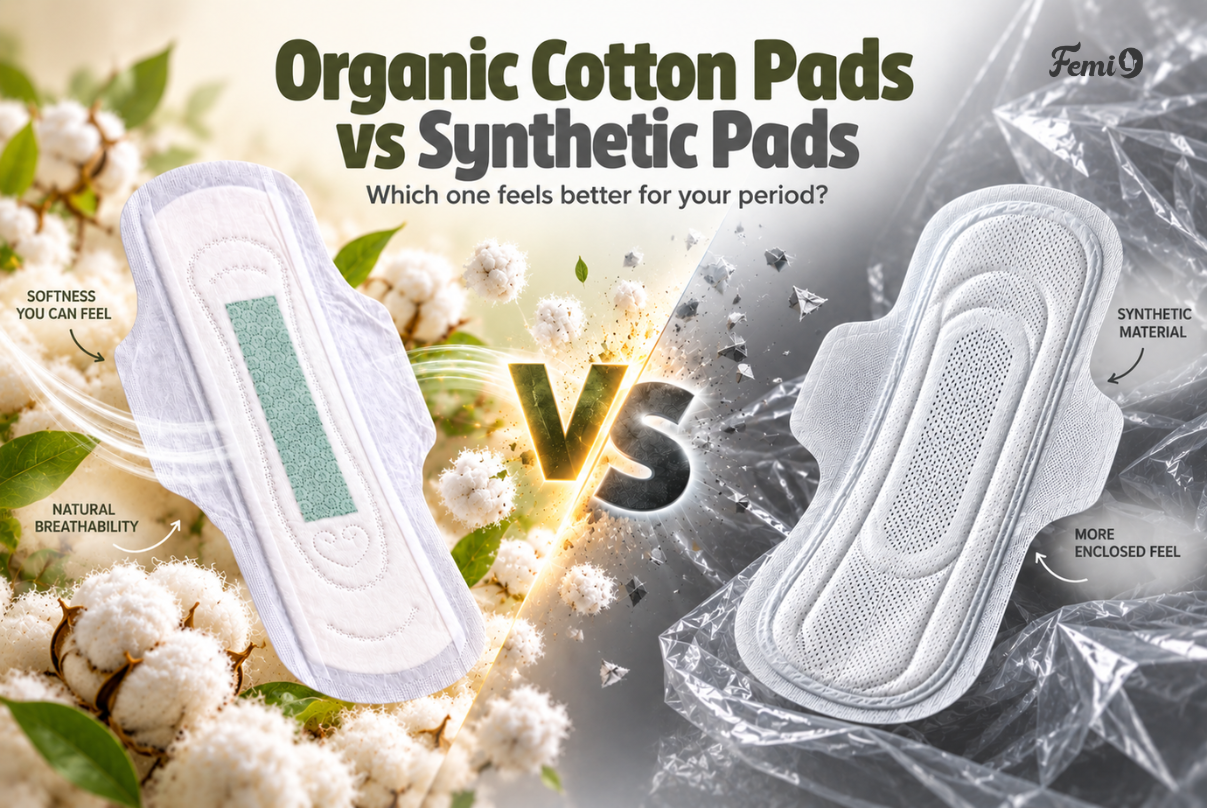
Organic Cotton Sanitary Pads vs Synthetic Pads: What Should Women Choose?
Have you ever reached the second or third day of your period and wondered, “Why does my pad suddenly feel so uncomfortable?”
Perhaps it feels warm, your skin starts itching around the edges, or you find yourself constantly adjusting your sanitary pad while working, travelling, sleeping or simply trying to get through the day.
Many women have accepted this discomfort as a normal part of menstruation. However, the discomfort may not always be caused by your period. The material that remains in contact with your skin for several hours can also affect how comfortable you feel.
This is one reason Organic Cotton Sanitary Pads are gaining attention among women looking for softer and more breathable period care.
But are cotton pads really different from synthetic sanitary pads? And does choosing an organic sanitary napkin automatically make it the better option?
This guide explains the differences between cotton and synthetic pads, what to consider when choosing sanitary pads for women, how pad materials may affect comfort and how to select protection that suits your skin, flow and lifestyle.
Are All Sanitary Pads Made of Cotton?
No.
One of the most common misconceptions about sanitary pads is that every soft-looking pad is made from cotton.
Terms such as “cottony soft” or “cotton-like” usually describe the feel of the surface. They do not necessarily mean that the pad is made from cotton.
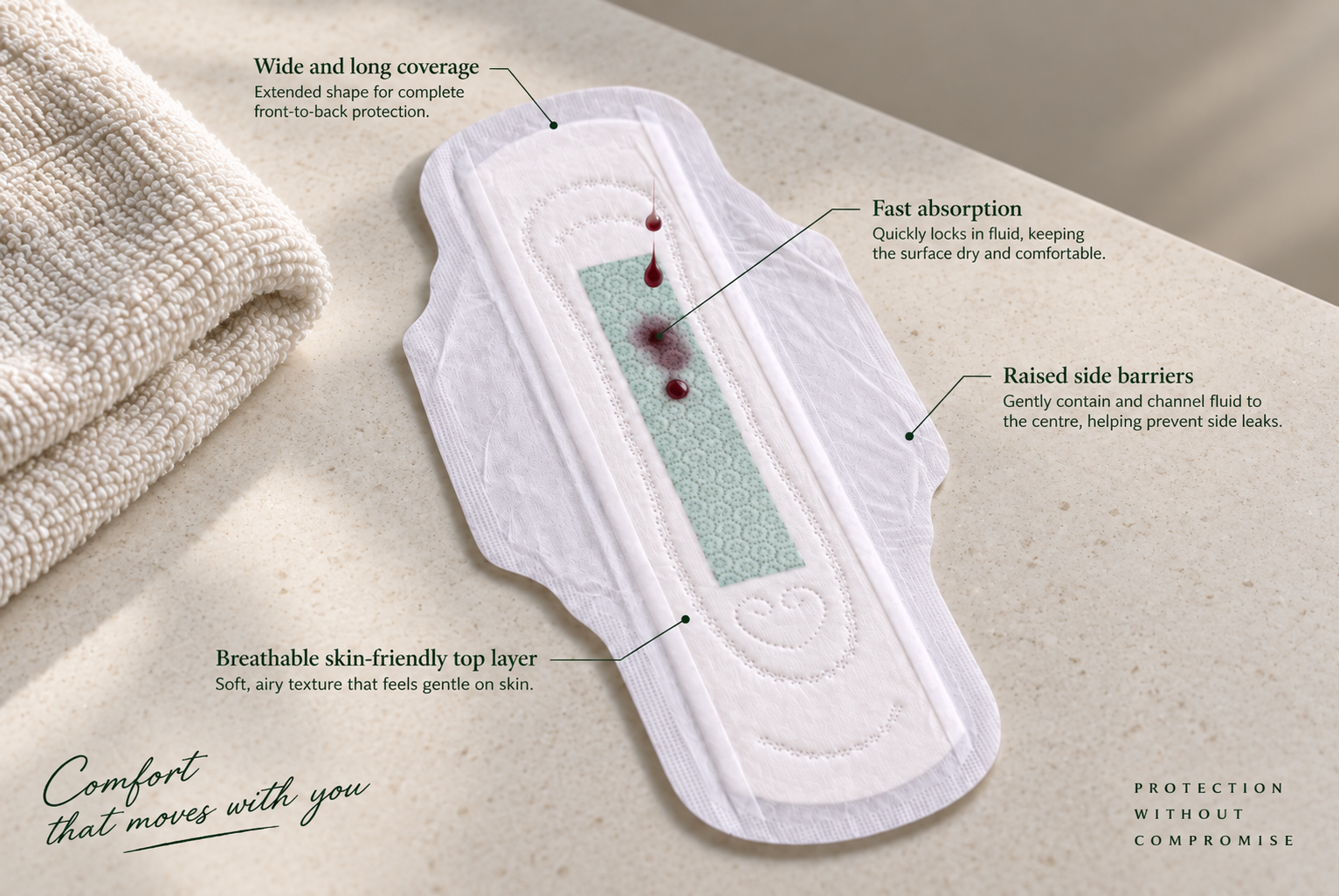
Disposable sanitary pads are made with multiple layers, including a top sheet, absorbent core, adhesives, back sheet and wings. Some of these layers may contain synthetic materials or plastics to provide absorbency, structure and leakage protection.
This does not automatically mean that every synthetic sanitary napkin is harmful. The more important question is:
What material is in direct contact with your skin, and how comfortable does it feel for your body?
For women who wear pads for several hours during every cycle, this distinction can make a meaningful difference.
Why Can Some Pads Feel Uncomfortable?
Your pad moves with you throughout the day.
Whether you are walking, sitting, exercising or sleeping, the surface of the pad remains in repeated contact with sensitive skin. Heat, sweat, menstrual fluid, friction and prolonged wear can all contribute to discomfort.
Heat and Moisture
A pad that feels less breathable may create a warmer and more humid environment around the skin.
This can be especially noticeable during long working hours, travelling or hot and humid weather.
Friction
Repeated rubbing between the sanitary pad, underwear and skin can leave the area feeling tender or irritated.
That is why softness should be considered alongside absorbency when choosing pads for women.
Fragrance and Sensitive Skin
Some menstrual products contain fragrances designed to mask odour. However, fragrances may irritate sensitive vulvar skin in some people.
If you regularly experience discomfort, choosing an unscented product and changing your pad regularly may help improve comfort.
Organic Cotton Sanitary Pads vs Synthetic Pads
|
Feature |
Organic Cotton Sanitary Pads |
Some Synthetic Pads |
|
Surface feel |
Soft and cotton-based |
Varies depending on the material |
|
Breathability |
Designed to support airflow |
Depends on the overall construction |
|
Sensitive skin |
May feel gentler for some users |
Certain materials or fragrances may irritate some users |
|
Fragrance |
Often available without added fragrance |
Some products may contain added fragrance |
|
Environmental impact |
Depends on the complete pad construction |
Plastic-containing components may create persistent waste |
|
Comfort |
Softness may help reduce the feeling of friction |
Varies considerably between brands |
The key point is that “organic” should not be the only feature you consider.
Absorbency, pad length, fit, leakage protection, breathability and how often you change your pad are equally important.
Benefits of Cotton Pads for Periods
1. Soft Contact With the Skin
During your period, the top sheet of your sanitary pad remains against delicate skin for several hours.
For many users, soft cotton pads for periods may feel more comfortable than a rough or plasticky surface.
If you are concerned about irritation, look for a soft cotton top layer and avoid unnecessary fragrance.
2. More Breathable Comfort
Nobody wants to spend an entire day at work feeling hot and uncomfortable underneath a pad.
Breathable cotton pads are designed to support better air circulation while the absorbent layers manage menstrual flow.
This can make a noticeable difference during long working days, travel or overnight use.
3. Suitable for Sensitive or Rash-Prone Skin
People searching for rash-free pads are usually looking for more than effective absorption. They want to avoid the itching, redness or soreness they may have experienced with other products.
No sanitary pad can guarantee that every person will remain completely rash-free because individual skin sensitivity varies.
However, choosing a soft, breathable and fragrance-free pad, along with changing it regularly, may help reduce common sources of irritation.
4. Period Care That Offers More Than Absorbency
A pad should do more than hold menstrual fluid.
Good sanitary pads for women should offer a balance of:
· Suitable absorbency
· Softness
· Breathability
· Secure fit
· Leakage protection
· Appropriate length
· Comfort during movement
· Skin-friendly materials
The best sanitary napkin is ultimately the one that suits your flow and your body.
What About Plastic and Menstrual Waste?
Another reason women are paying closer attention to sanitary pad materials is menstrual waste.
Disposable sanitary products may contain non-biodegradable plastic components. This has contributed to growing concerns about the environmental impact of menstrual waste.
However, a product marketed as an organic sanitary pad is not necessarily completely biodegradable.
Always check the complete product construction and disposal instructions. A cotton top sheet does not automatically mean that the entire sanitary napkin is plastic-free or biodegradable.
Small, informed choices are more useful than guilt. You do not have to completely change the way you manage your period overnight.
How to Choose the Right Sanitary Pad
Before buying your next pack, ask yourself these five simple questions:
What touches my skin?
Check the material of the top sheet instead of relying only on terms such as “soft” or “cottony.”
Does it contain added fragrance?
If your skin is sensitive, fragrance-free sanitary pads may be worth considering.
Is it suitable for my flow?
A pad for a light-flow day does not need to be the same size as a pad designed for heavy flow.
Does it feel breathable?
Breathability becomes especially important when you wear a pad for several hours.
Am I changing it regularly?
Even a comfortable pad should be changed regularly and sooner if it feels wet, saturated or uncomfortable.
Why Femi9 Focuses on Cotton Comfort
At Femi9, period care is designed around a simple idea: women should not have to choose between protection and comfort.
Femi9 pads are designed with features that support softness, breathability, absorption and everyday confidence:
· Breathable cottony top layer — allows air to pass through and helps reduce the build-up of heat and moisture during long days.
· Pure surgical cotton layer — provides a soft, medical-grade cotton layer closest to the skin.
· 9 smart layers — support wicking, spreading, locking and sealing, helping move fluid away from the surface instead of allowing it to pool.
· 4X absorption — offers enhanced absorption compared with a standard pad, helping provide reliable protection between changes.
· Leakage-free construction — features a sealed core and wings designed to help keep the pad securely in place during daily movement.
· Rash-free and chemical-free — made without chlorine bleaching, dyes or synthetic fragrance.
· Made for daily use — suitable for light protection on non-period days, including discharge or spotting.
· Fully biodegradable and eco-friendly — designed to break down after disposal instead of remaining in landfill.
For heavier flow or overnight protection, women can choose longer 330mm pads. The 290mm options are suitable for regular-flow needs, while smaller options are available for lighter protection and everyday use.
Instead of simply choosing the thickest sanitary napkin available, select protection according to your body, your flow and your daily routine.
Your Period Is Personal — Your Pad Choice Can Be Too
Some women can use almost any sanitary pad without giving it much thought.
Others know exactly what day two feels like: the constant adjusting, the warmth, the rubbing and the quiet wish to get home and change into something more comfortable.
You should not have to tolerate ongoing discomfort simply because you have a period.
Choosing Organic Cotton Sanitary Pads is not just about following a trend. It is about becoming more aware of what remains against your skin for several days every month.
Read the materials. Understand your flow. Choose softness where it matters. Change your pad regularly.
Most importantly, choose period care that allows you to get on with your day without constantly reminding you that you are wearing a pad.


Sanitation Pads
27th May 2025
At Sanitation Towels, we specialize in high-quality sanitation products, including both cotton and synthetic options tailored to your needs. Our certified professionals are available 24/7 to help you choose the right sanitary towel that offers comfort, reliability, and safety. Plus, we offer upfront pricing with no hidden costs, ensuring a smooth and trustworthy experience. Learn about more info visit this website: https://sanitationtowel.com/