Chemical-Free Sanitary Pads: What Does ‘Chemical-Free’ Really Mean?
Quick answer: “Chemical-free sanitary pads” is shorthand, not a literal claim — everything is made of chemicals, even cotton. What the term honestly means is pads made without the added extras that commonly irritate skin: no added fragrance, no dyes, no chlorine bleaching, and fewer plastic-heavy synthetic layers. In practice, the safest bet for sensitive skin is an organic cotton pad with a soft, breathable top layer and the right absorbency for your flow. Femi9’s chemical-free organic cotton pads are built on exactly that definition.
“The first wealth is health.” — Ralph Waldo Emerson
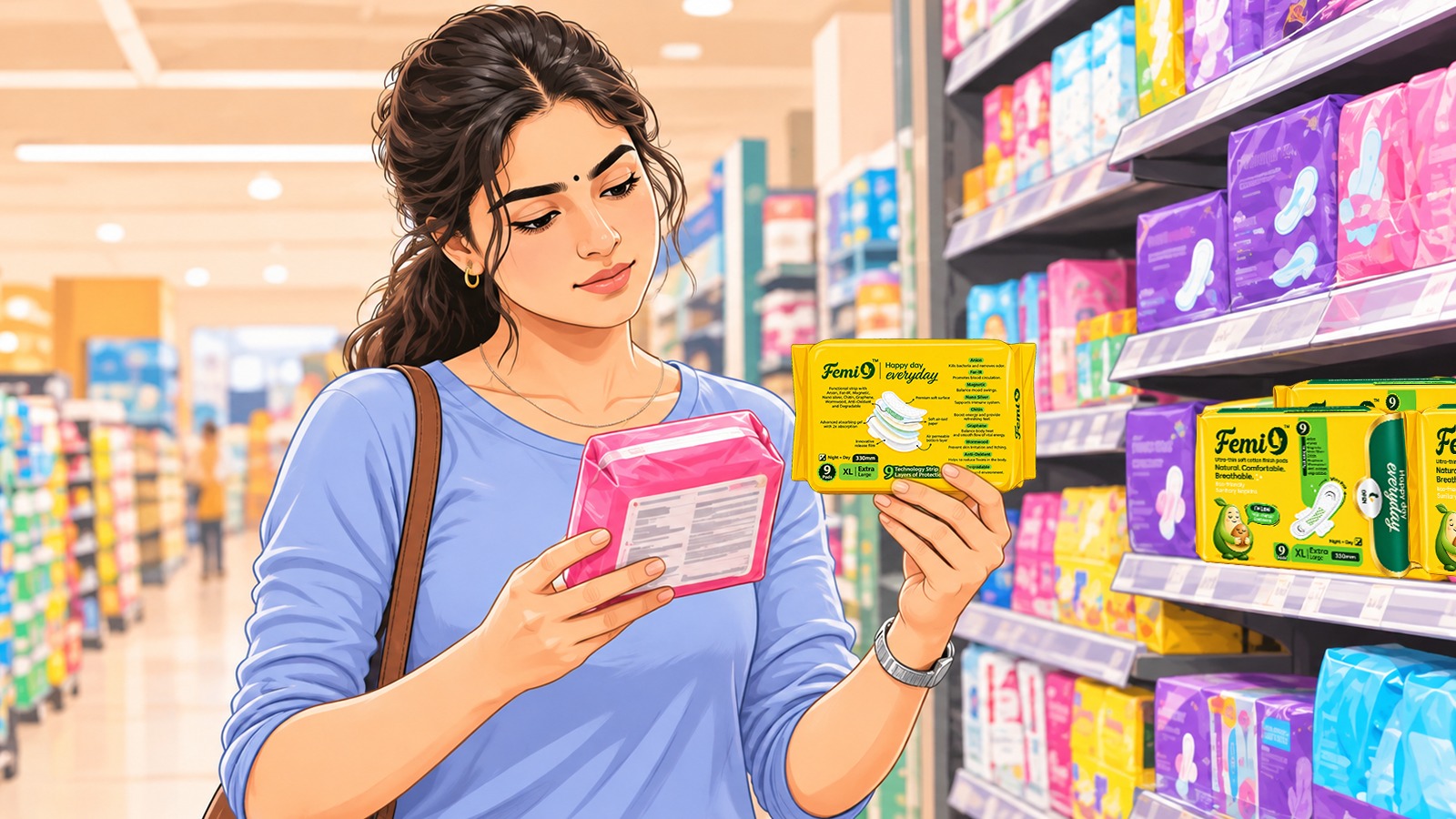
You’re standing in the aisle, and half the packets say “chemical-free,” “natural,” “herbal,” “100% safe.” None of them explain what that actually means. If you’ve ever bought a pad hoping it would stop the itching and rashes, only to end the day uncomfortable again, you’re not being fussy — you were sold a word, not an answer. You deserve to know what’s touching your skin for several hours a day, every month. Let’s make the label make sense.
Why ‘chemical-free’ is so confusing
The phrase sounds reassuring but means nothing on its own. There is no official standard behind “chemical-free” on a sanitary pad, so any brand can print it. Taken literally it’s impossible — water and cotton are chemicals too. That’s why the word alone can’t tell you whether a sanitary napkin is actually gentle. The useful question isn’t “is it chemical-free?” but “what has been left out, and what is it made of?”
What ‘chemical-free’ should actually mean
It should mean free from the added ingredients that irritate skin — not free from all matter. When a pad is described this way honestly, it usually means no added fragrance, no dyes, no chlorine bleaching and fewer synthetic plastic layers. These added extras are the usual suspects behind redness, itching and rash, especially for sensitive skin. The American Academy of Dermatology notes that fragrances and certain additives are common triggers for skin irritation — which is why removing them matters.
What to check on the pack instead of the slogan
Read the materials, not the marketing. Before you trust any “chemical-free” claim, check these:
Top layer — a soft, breathable cotton layer against the skin, not a plastic-feel net. This is what prevents most rashes.
Core material — cotton pads for periods or organic sanitary pads that breathe, rather than heavy synthetic padding.
Fragrance & dyes — look for unscented and dye-free; added scent is a frequent irritant.
Absorbency & size — light, regular or heavy flow pads; L pads for daytime and XL pads for heavy days and overnight.
Breathability — a build that lets air through so moisture doesn’t sit against the skin.
Comparing pads: comfort, breathability and absorbency
Judge a pad on how it feels and performs, not on its tagline. A genuinely skin-friendly pad combines a gentle cotton surface, real breathability and absorbency matched to your flow. Compare on those three, then choose for your own skin and cycle: sensitive skin leans rash-free and breathable; heavy days need an XL with secure coverage; lighter days do fine with an L. Organic cotton pads tend to win on all three because cotton is soft, breathable and low-irritation by nature.
How to choose a truly skin-friendly pad: a quick checklist
Short version: ignore the slogan, read the materials, match it to your skin and flow. Here’s the order.
Skip the buzzwords — “chemical-free” and “natural” aren’t regulated terms.
Check the top layer first — soft cotton, not plastic, if your skin reacts at all.
Choose fragrance-free and dye-free — these are the most common irritants.
Confirm it breathes — airflow keeps skin dry and calm.
Match absorbency and size — L for daytime, XL for heavy flow and nights.
Change every 4–6 hours — good hygiene matters more than any single label.
The honest part no label admits
Here’s the thing: no sanitary pad is literally “chemical-free,” and any brand claiming otherwise is bending the truth. The honest promise a good brand can make is “free from the added fragrances, dyes and harsh synthetics that irritate skin” — and then prove it by listing what the pad is made of. The World Health Organization and the NHS put the focus on safe, comfortable, regularly changed period products rather than on marketing claims. Trust materials and your own comfort over any slogan.
Where Femi9 fits
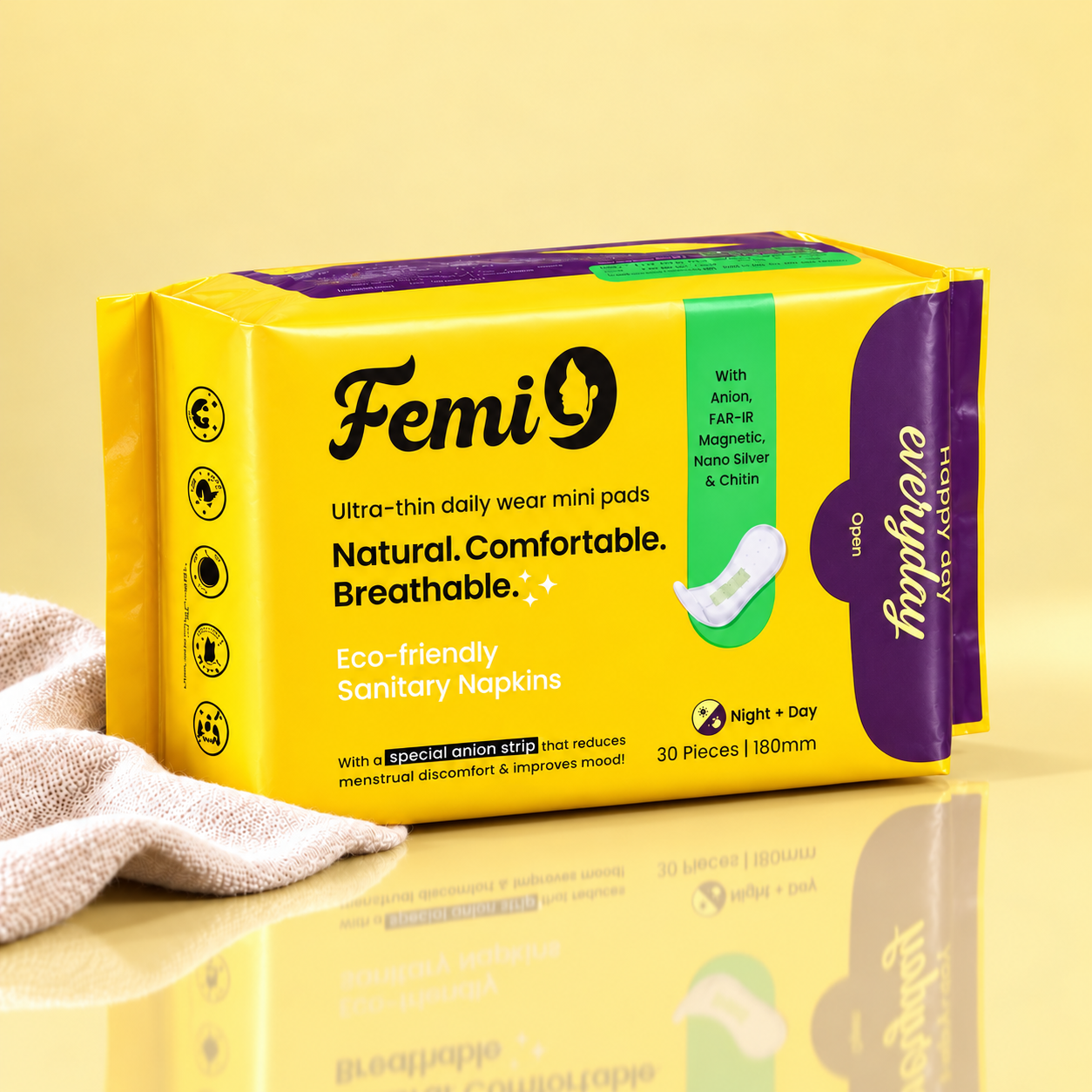
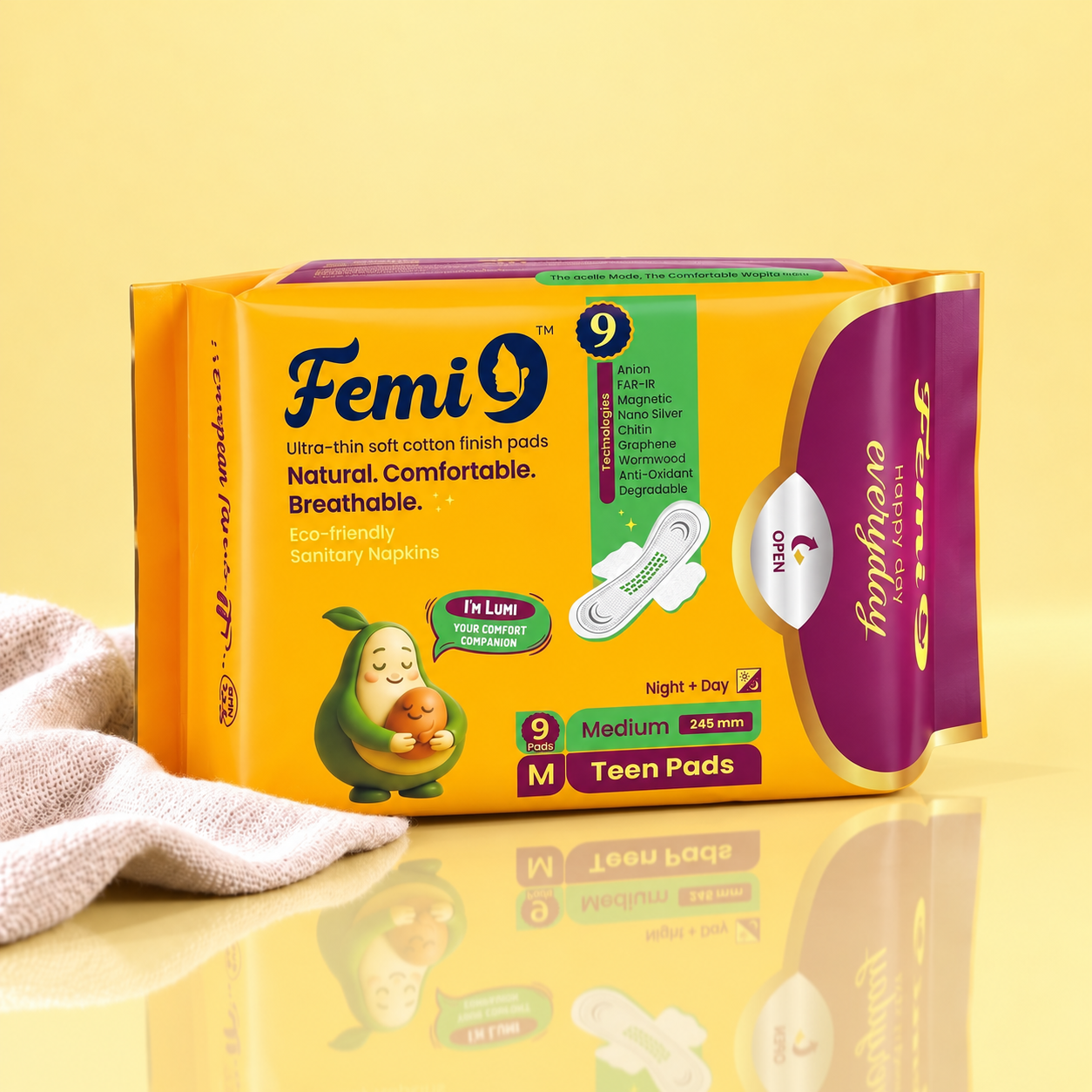
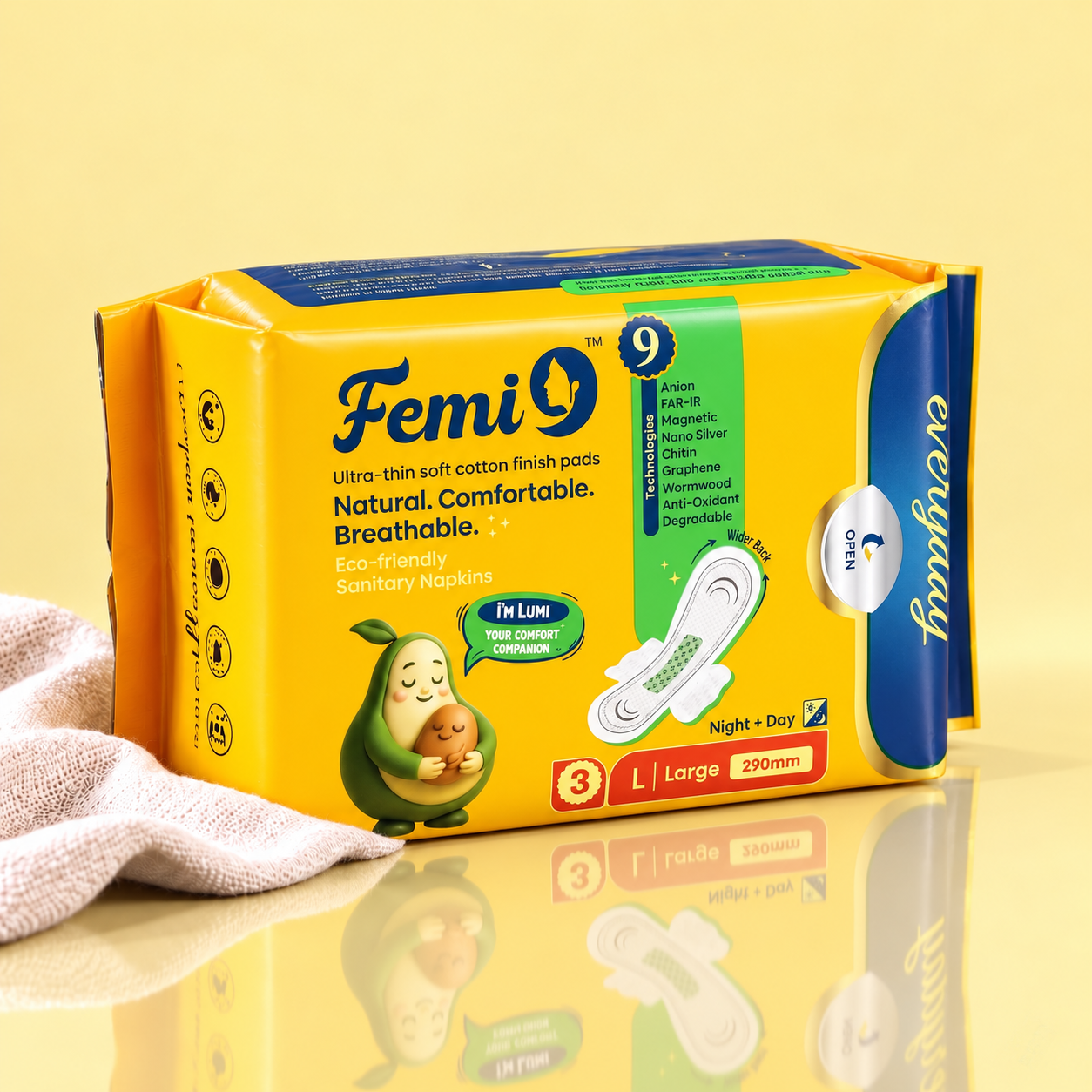
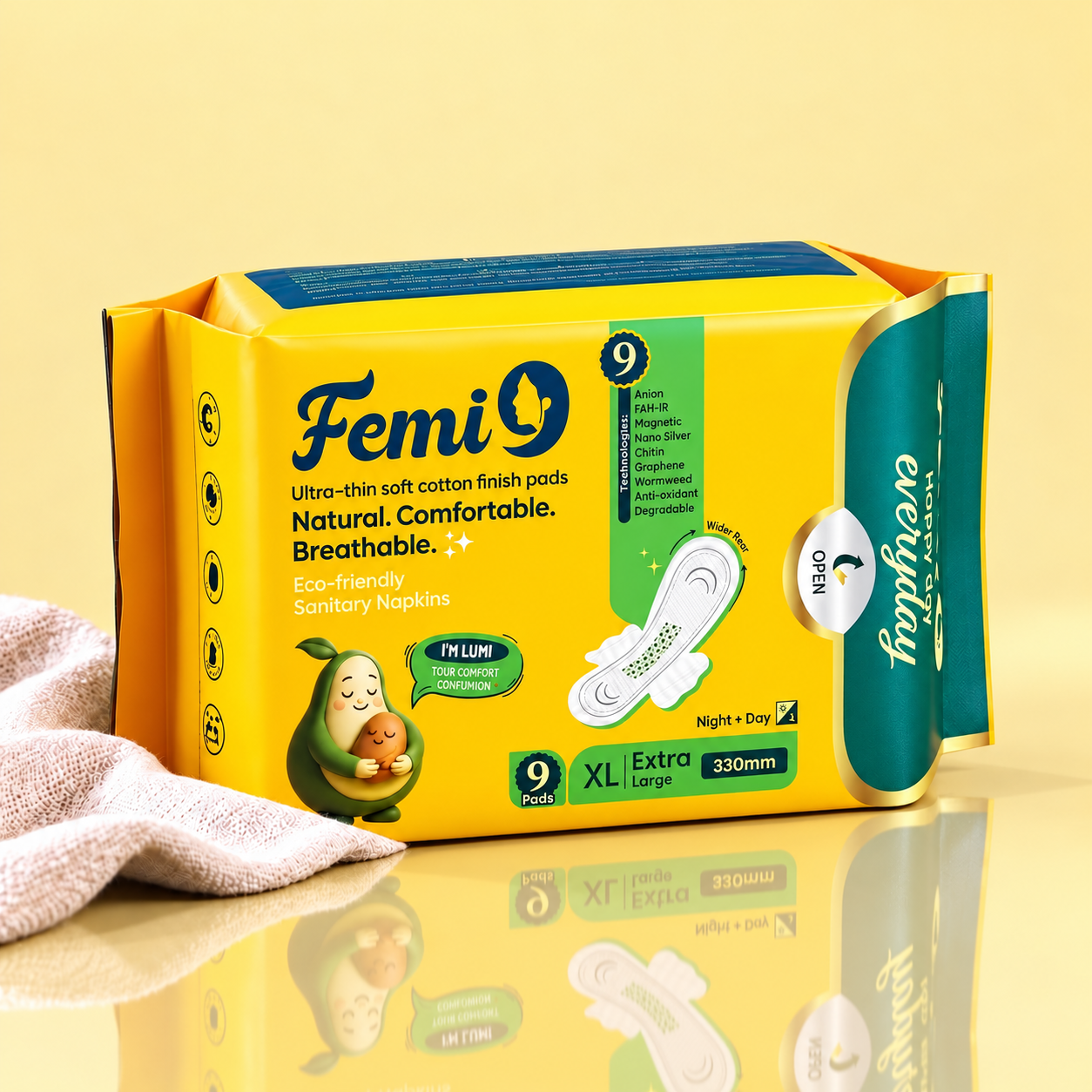
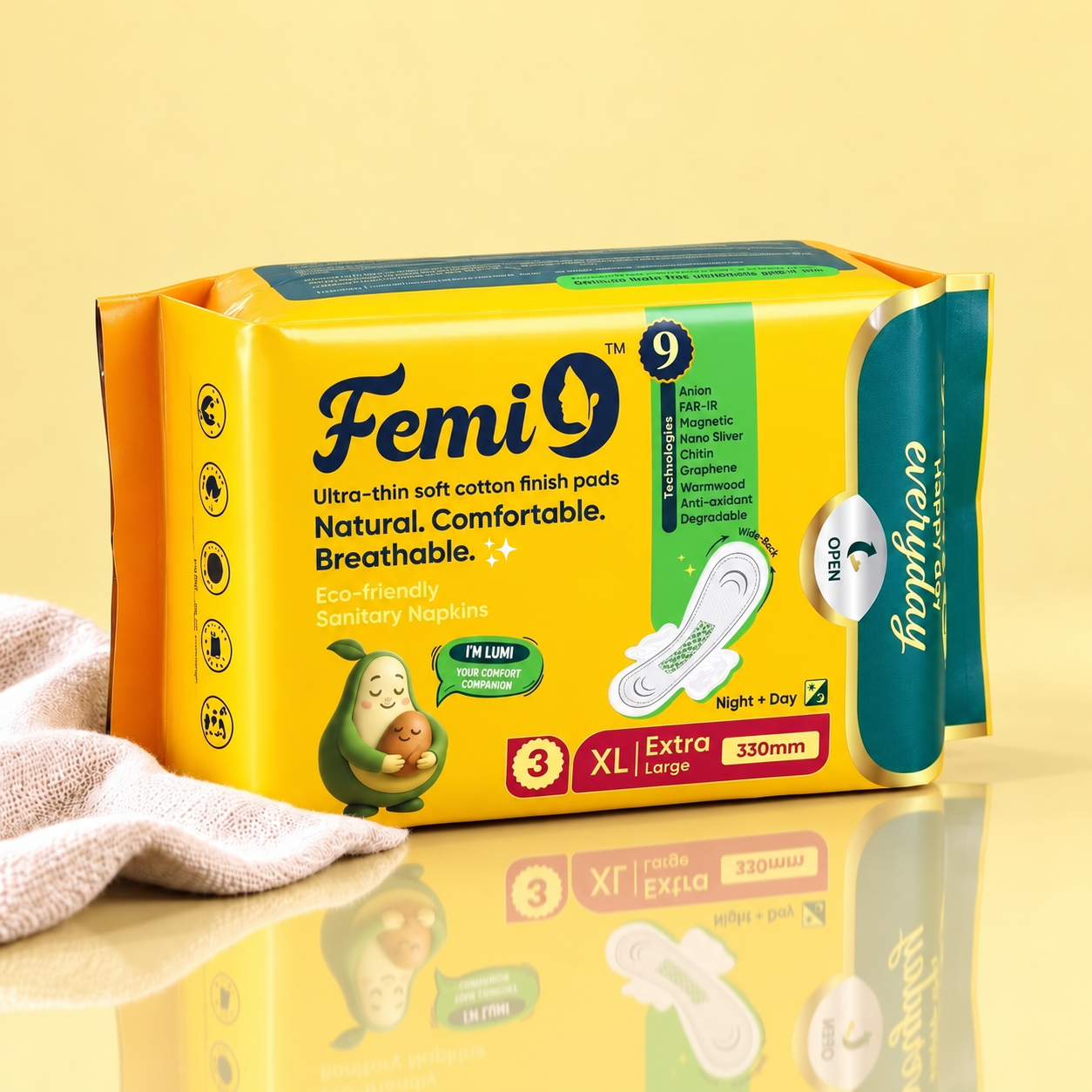
Femi9 makes chemical-free organic cotton sanitary pads the honest way: a soft, breathable cotton top layer, cotton across the layers, no added fragrance or dyes, and dependable absorbency for light through heavy flow in both L and XL sizes. If you’re moving away from synthetic pads because of rashes, the guide to switching to cotton pads and the menstrual hygiene guide are good next reads.
“Chemical-free” isn’t a promise — it’s a prompt to look closer. Read the materials, trust how your skin feels, and the right pad stops being a guess.
Explore more from Femi9
Are cotton sanitary pads worth switching to?
Best sanitary pads for summer heat and heavy flow
Best sanitary pads for heavy flow and leak protection
The complete menstrual hygiene guide
Shop Femi9 chemical-free organic cotton pads
External references
World Health Organization — Menstrual health: https://www.who.int/health-topics/menstrual-health
NHS — Periods: https://www.nhs.uk/conditions/periods/
American Academy of Dermatology — Sensitive skin care: https://www.aad.org/public/everyday-care/skin-care-basics/dry/sensitive-skin
Frequently asked questions
What are chemical-free sanitary pads?
Chemical-free sanitary pads are pads made without added fragrance, dyes, chlorine bleaching or heavy synthetic layers — the extras that most often irritate skin. Femi9’s organic cotton pads are built to this honest definition, with cotton across the layers.
Are chemical-free pads really chemical-free?
Not literally — everything, including cotton, is made of chemicals. The honest meaning is “free from added irritants like fragrance and dyes.” Femi9 is upfront about this, making fragrance-free organic cotton pads and telling you what they’re made of.
Which sanitary pads are safe for sensitive skin?
The safest pads for sensitive skin have a soft cotton top layer, no fragrance or dyes, and good breathability. Femi9’s rash-free organic cotton pads are made specifically for women and girls whose skin reacts to regular pads.
What chemicals are in normal sanitary pads?
Conventional pads can include added fragrances, dyes, chlorine-bleached pulp and plastic-based layers — any of which can trigger irritation. Switching to Femi9’s organic cotton sanitary pads removes those common irritants.
Are organic cotton pads chemical-free?
Organic cotton pads come closest to the spirit of “chemical-free” because they skip added fragrance, dyes and synthetic layers and use breathable cotton instead. Femi9’s organic cotton pads are a dependable example for everyday comfort.
What size chemical-free pad should I use?
Use an L pad for regular daytime flow and an XL pad for heavy days and overnight, when leaks are most likely. Femi9 offers chemical-free L and XL cotton pads so you stay gentle on skin and protected around the clock.