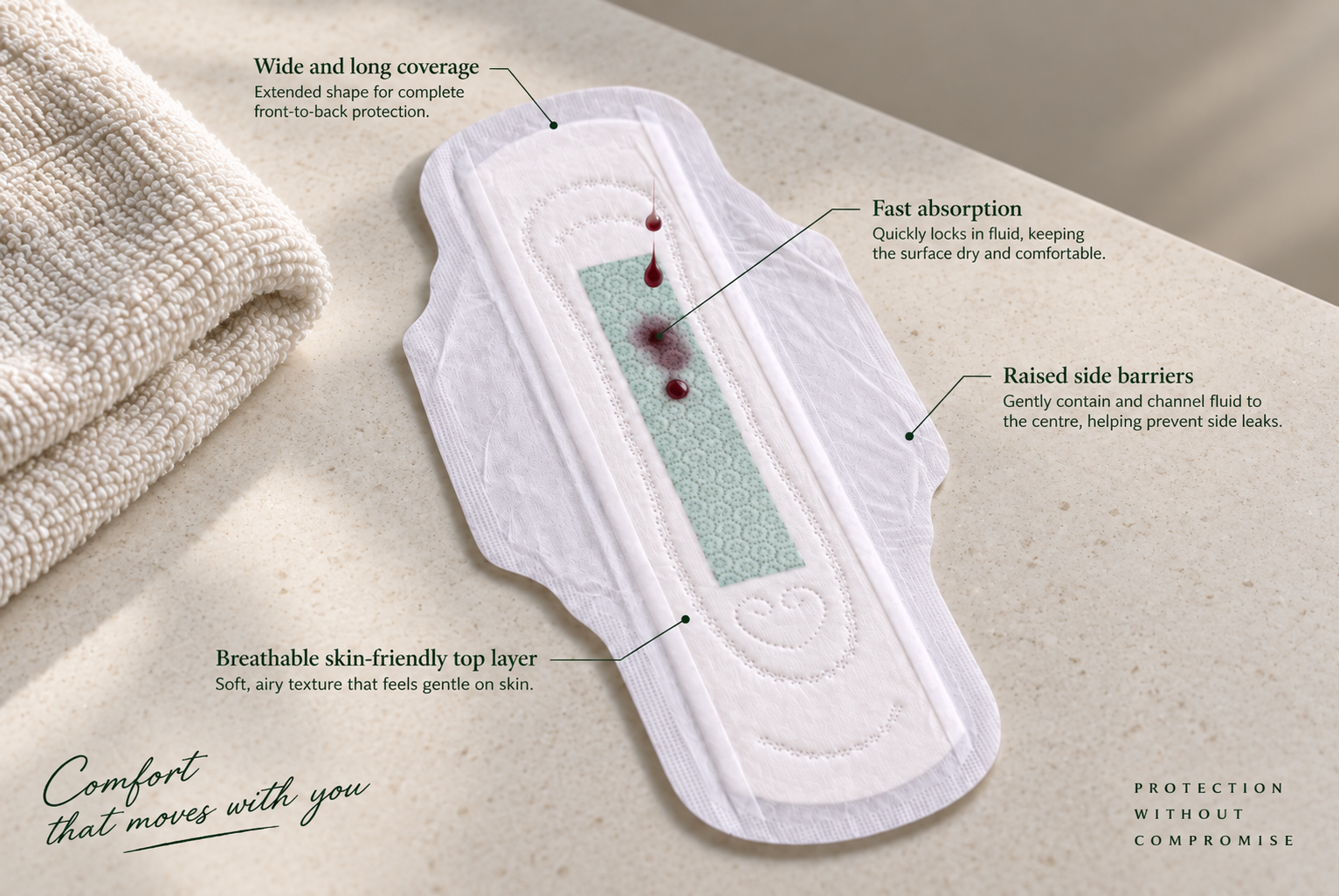



How to Choose the Best Rash-Free & Chemical-Free Sanitary Pads in India
There's a particular kind of period discomfort nobody warns you about. Not the cramps — those get all the sympathy. I mean the quiet one: the itch, the redness, that raw, stinging patch of skin that turns up around day two and has you shifting in your seat all day, hoping no one notices.
If that sounds familiar, you're not being dramatic, and you're definitely not alone. The reassuring part is that most period rashes are preventable with a few small, natural habits — no expensive products, no complicated routine. This is a realistic, skin-first guide to what actually causes the irritation and how to prevent period rashes naturally, starting with your very next cycle.
The Rash Nobody Talks About
Period rashes are far more common than the silence around them suggests. In a 2025 cross-sectional survey of Indian women, nearly 63% reported skin irritation from their sanitary pads at some point. A separate study of menstrual product use in Coimbatore, Tamil Nadu found that heat, rashes, and general discomfort were among the top complaints women had about conventional pads, especially in a hot, humid climate.
So if the skin around your intimate area feels sore, itchy, or inflamed during your period, it isn't a personal failing or bad hygiene. Very often, it's the pad — and that's something you can change.
Why Do Sanitary Pads Cause Rashes?
Understanding what causes period rashes makes them much easier to prevent. Most conventional pads use a plastic (polypropylene) top sheet — the layer against your skin — which traps heat and moisture for hours. Add constant friction as you move, and sometimes added fragrances or dyes, and you have the perfect setup for irritation. Doctors have a name for it: contact dermatitis, and when a pad is the trigger, it's specific enough that clinicians even describe sanitary pad dermatitis as its own recognised reaction.
This is why sanitary pads for sensitive skin matter so much. The single biggest lever you have is the material touching you for eight-plus hours a day — swap the plastic surface for something breathable, and you remove the main cause rather than just soothing the symptom.
How to Prevent Period Rashes Naturally
1. Switch to rash-free cotton pads
This is the highest-impact change, and it asks nothing new of your routine. Soft, breathable organic cotton sanitary pads for sensitive skin let air flow and manage moisture without the chemicals and fragrances that spark flare-ups. If irritation keeps returning, switch to Femi9's chemical-free, rash-free cotton pads — designed to keep sensitive skin calm and comfortable, even on heavy-flow days.
2. Wear breathable cotton and loose clothing
Soft cotton underwear lets skin breathe and handles moisture far better than synthetic fabric, cutting both sweat and friction. Pair it with loose, breathable clothing so heat and sweat don't get trapped against already-sensitive skin.
3. Keep the area clean and dry
Wash your intimate area with plain lukewarm water and gently pat it dry. Skip scented soaps, perfumes, and wipes — they strip and irritate delicate skin, often making a rash worse rather than better.
4. Soothe irritation with gentle natural remedies
If skin already feels sore, apply a little pure aloe vera gel or virgin coconut oil to the outer affected area only — never inside the vaginal area. A thin, gentle protective layer helps calm redness, an approach also noted by University of Iowa Health Care for protecting irritated skin while it heals.
5. Stay hydrated and eat well
Drinking enough water and eating fresh fruits and vegetables supports healthy, resilient skin. Good nutrition helps your body recover faster and keeps skin more comfortable across your whole cycle.
Common Mistakes to Avoid
● Ignoring persistent irritation. A one-off rash is common; one that returns every single cycle is a signal worth acting on, not enduring.
● Reaching for scented or medicated intimate washes. They usually irritate sensitive skin further. Plain water is safer.
● Applying creams inside the vaginal area. Soothing remedies belong on the outer skin only.
● Assuming every pad is the same. Material makes a real difference — a breathable cotton top sheet behaves very differently from a plastic one.
● Switching everything on day one. Trial a rash-free pad on a lighter day first, so you're confident before your heaviest days.
When to See a Doctor
Natural habits prevent most period rashes, but they aren't a substitute for medical care. If a rash is severe, lasts several days, or comes with unusual discharge, swelling, blistering, or fever, see a healthcare professional. Global health bodies such as the World Health Organization emphasise that good menstrual health means products and care that are safe and comfortable for your situation — and a doctor can identify anything a product change alone won't fix.
Frequently Asked Questions
Can sanitary pads cause rashes?
Yes. Plastic top sheets trap heat and moisture, friction rubs sensitive skin, and added fragrances or dyes can trigger allergic reactions — together these can cause contact dermatitis, sometimes called sanitary pad dermatitis. Breathable cotton pads remove the most common trigger.
Which sanitary pad is safe for sensitive skin?
Look for pads with a certified organic or breathable cotton top sheet and no added fragrance or dyes. The layer against your skin matters most, so a chemical-free cotton pad is generally the safest choice for sensitive or rash-prone skin.
Which sanitary pad is best for rashes?
Rash-conscious, chemical-free cotton pads are the best fit, because they tackle the cause rather than mask it. Femi9's organic cotton pads are built around a breathable cotton surface to keep sensitive skin cool and calm through your period.
Are organic cotton pads better for preventing rashes?
For most people with sensitive skin, yes. Because a breathable cotton surface traps less heat and moisture than plastic — a known contributor to period rashes — many users find cotton-based pads noticeably gentler. If irritation persists regardless of pad type, check with a doctor.
How do I treat a period rash naturally at home?
Keep the area clean and dry, switch to a breathable cotton pad and loose cotton clothing, and apply a little pure aloe vera or coconut oil to the outer skin only. Most mild rashes settle within a few days; if yours doesn't, seek medical advice.
Final Thoughts: Comfort Is Not a Luxury
Your period should never leave you sore, itchy, and counting down the hours. Small, natural changes — better hygiene, breathable clothing, gentle skincare, and above all a rash-free cotton pad from Femi9 — address the cause instead of chasing the symptom. You don't need a new routine or a single extra step; just your next pack. You can read more about their skin-first, earth-conscious approach on the Femi9 blog.
Caring for your skin during your period isn't indulgent — it's part of caring for your health. Start with one gentle switch this cycle.
References
● Cosmoderma (2025) — Survey on adverse effects of sanitary pads: cosmoderma.org
● Menstrual product use, Coimbatore (Tamil Nadu) qualitative study: NCBI / PMC
● Cleveland Clinic — Vulvar (contact) dermatitis: my.clevelandclinic.org
● Sanitary pad dermatitis — clinical case report: NCBI / PMC
● University of Iowa Health Care — Contact dermatitis of the vulva: uihc.org
● World Health Organization — Menstrual health: who.int