


Sleep and Women’s Hormones: Why Women’s Sleep Problems Are Different
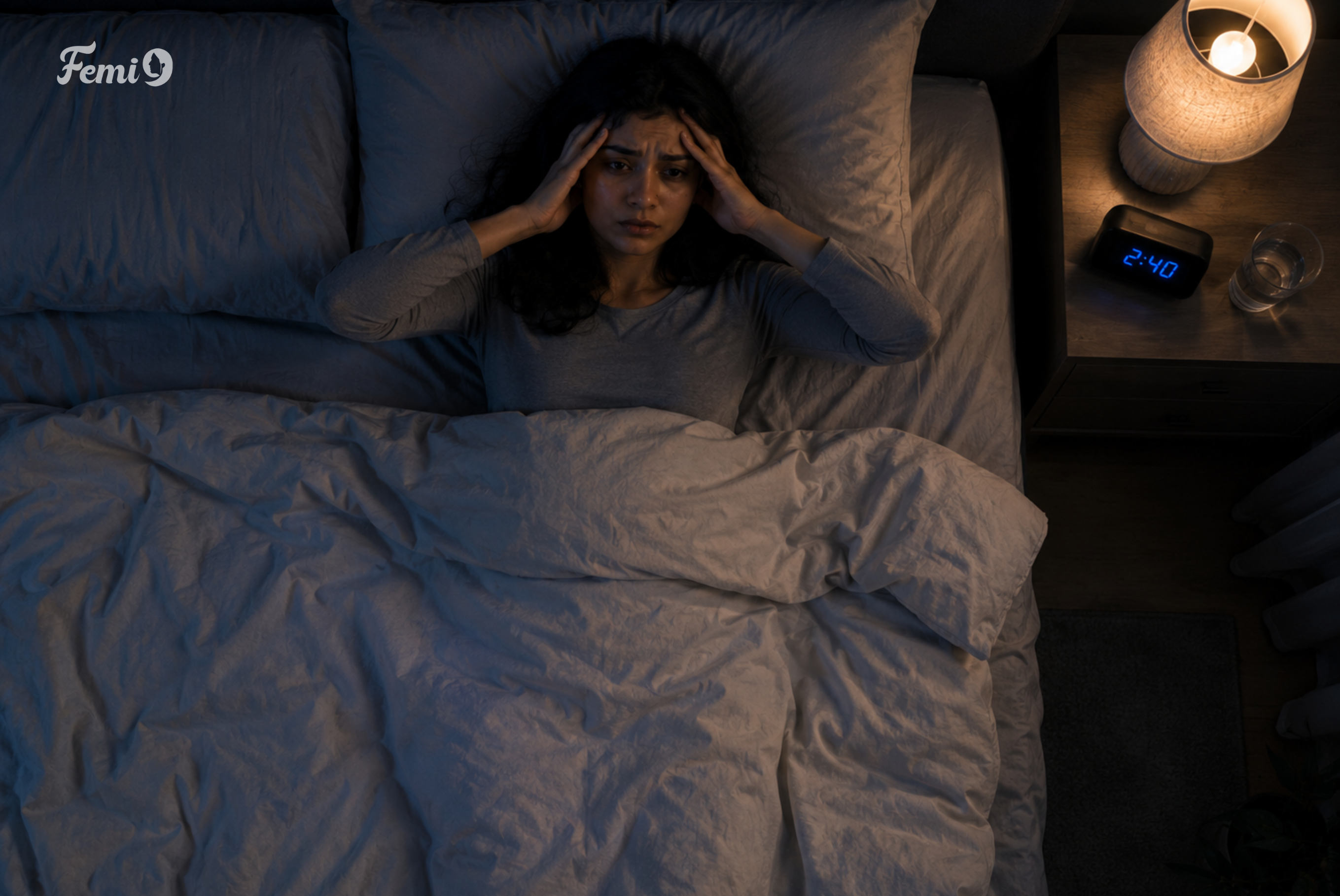
It is 2:40 in the morning. The house is finally quiet. Everyone else is asleep. And you are lying there, wide awake for the third night this week, doing the arithmetic you always do at this hour — if I fall asleep right now, I still get four and a half hours.
You are not lazy. You are not bad at sleeping. And you are almost certainly not imagining it when you notice that in some weeks of the month you sleep like a stone, and in others you surface at 3 a.m. with your heart going and no obvious reason for it.
Here is what most sleep advice quietly misses: it was largely built around a body that does not run on a monthly hormonal cycle. Women’s sleep is different — measurably, biologically different — and the difference is not a character flaw. Once you can see the pattern, the bad nights stop feeling random, and they start becoming something you can actually plan around.
Women’s Sleep Problems Are Real — And the Research Backs It Up
If you have ever been told to just switch off your phone and stop overthinking, this section is for you. A meta-analysis of 13 population studies put the overall prevalence of insomnia at around 22 per cent
— and found women significantly more likely to have it than men, with an odds ratio of 1.58. A separate review of insomnia across the female lifespan notes that the gap widens after puberty and tracks closely with the points in life where reproductive hormones shift the most.
In India, the picture is the same, with an extra layer. Data from the Longitudinal Ageing Study in India (LASI) recorded a higher prevalence of sleep disorders among women than men, and a nationally representative analysis of postmenopausal women found that 22.27 per cent reported frequent sleep problems. Smaller Indian studies of working women in urban areas have reported poor sleep quality in the majority of participants — women juggling a job, a household, and, very often, everybody else’s bedtime before their own.
None of this means something is wrong with you. It means the thing that keeps waking you has a name, a mechanism, and in many cases a fix.
Your Menstrual Cycle Is a Sleep Schedule You Never Agreed To
Oestrogen and progesterone do not only govern your period. Receptors for both sit in the areas of the brain that regulate sleep, which is why a clinical review of the menstrual cycle and sleep found sleep disturbance is most commonly reported in the few days before bleeding starts and the first days of the period itself. Here is how the month tends to unfold.
Days 1–5: Your Period — Pain, Heat and the 3 a.m. Leak Check
The first two or three nights are often the worst, and rarely for one single reason. Cramps peak. Prostaglandins are high. And then there is the layer nobody puts in a medical paper: the half-conscious 3 a.m. check to see whether you have leaked, the towel on the mattress, the sleeping on your back so you do not move too much. That is not fussiness. That is your nervous system refusing to fully let go because a part of your brain is on guard duty all night.
Days 6–13: The Follicular Phase — Usually Your Easiest Nights
As bleeding ends, oestrogen climbs and body temperature settles at its lowest point of the cycle. Falling asleep tends to get easier, energy returns, and mood generally lifts. If you are going to schedule an early morning, a long travel day or something demanding, this is the stretch of the month that will forgive you for it.
Day 14 or Thereabouts: Ovulation
A short window where some women sleep beautifully and others report a night or two of restlessness. Oestrogen peaks, then drops sharply. If you notice a single odd, wired night in the middle of your cycle every month, this is very likely where it is coming from — and it usually passes on its own.
Days 15–28: The Luteal Phase — Where Most of the Trouble Lives
After ovulation, progesterone rises, and with it your core body temperature climbs by roughly 0.3–0.7°C. That matters more than it sounds, because your body needs to shed heat in order to fall asleep and stay asleep. Research on thermoregulation across the menstrual cycle found that heat loss was actively suppressed during the first two hours of sleep in the luteal phase. In practical terms: you feel exhausted, you get into bed, and then you lie there too warm to drop off. Progesterone also makes you sleepy during the day while making night-time sleep lighter and more broken — tired and wired, at the same time.
The Last Three or Four Days: Premenstrual Nights
This is the crunch point for a large number of women. Progesterone and oestrogen both fall away sharply, taking mood, temperature stability and sleep quality with them. Anxiety, breast tenderness, headaches and cramps all predict difficulty sleeping. If your worst nights land like clockwork just before you bleed, that is not coincidence, and it is not weakness. It is a well-documented pattern with a name.
The Life Stages That Rewrite the Rules Completely
Adolescence: When the Pattern First Appears
The gender gap in insomnia opens up after puberty, not before it. A teenage girl who suddenly cannot sleep in the week before her period is not being dramatic — she is meeting her own hormonal cycle for the first time, usually with nobody explaining what is happening. Naming it early, out loud, saves years of quiet self-blame.
PCOS and PCOD: An Under-Recognised Sleep Problem
Polycystic ovary syndrome is common in India and it affects sleep in ways that are still routinely missed. A systematic review and meta-analysis of sleep apnoea in PCOS found obstructive sleep apnoea in around 35 per cent of women with the condition, and the odds of having it were substantially higher than in women without PCOS. If you have PCOS or PCOD and you snore, wake unrefreshed after eight hours, or feel foggy all day, that is worth raising with your doctor specifically
— not filing under general tiredness.
Pregnancy and the Postpartum Months
Progesterone soars, the bladder shrinks in usable capacity, heartburn arrives, and finding a comfortable position becomes a nightly negotiation. After delivery, sleep fragments around feeds, and the hormonal drop is steep. Broken sleep in this period is expected; persistent inability to sleep even when the baby sleeps is not, and deserves a conversation with a doctor rather than endurance.
Perimenopause and Menopause
Falling oestrogen destabilises the body’s temperature control, which is why night sweats and 3 a.m. waking become so common in the forties and fifties. This is one of the most treatable stages on the list, and one of the most under-treated, largely because so many women assume it is simply the price of getting older.
The Extra Layer Indian Women Carry
Biology is only half the story. In most Indian households, women go to bed last and wake up first. Sleep is what is left over after the dishes, the lunch boxes, the elderly parent, the child’s exam revision and the WhatsApp group that will not settle down. Add shared bedrooms, early-rising households and the very real cultural habit of treating a woman’s rest as the most negotiable thing in the house, and you get sleep debt that no amount of chamomile tea will repay.
There is also the part almost nobody says aloud: many women sleep badly during their period simply because they are anxious about staining a shared bed. When there is no private room and no easy way to change at 2 a.m., that anxiety is not irrational — it is logistics. Which, usefully, means it is solvable.
How to Sleep With Your Hormones Instead of Against Them
1. Track Your Sleep Beside Your Cycle for Two Months
Note two things each morning: the day of your cycle, and how you slept out of ten. Two cycles is usually enough to reveal a pattern. Once you know that days 24 to 28 are your difficult ones, you can stop treating every bad night as a personal failure and start protecting those specific nights in advance.
2. Make the Second Half of Your Cycle Cooler
Because your core temperature is genuinely higher after ovulation, cooling is not a comfort preference
— it is the mechanism. Drop the room temperature by a degree or two, switch to loose cotton nightwear, and try a warm shower an hour before bed; the rebound drop in skin temperature afterwards helps signal sleep onset.
3. Guard the Last Hour Before Bed
The NHS guidance on sleep is unglamorous and effective: consistent sleep and wake times, a dark and quiet room, and no bright screens in the final stretch. If a full hour is unrealistic — and for most women running a household, it is — start with twenty protected minutes. Consistency beats duration here.
4. Get Morning Light, and Be Honest About Caffeine
Ten to fifteen minutes of daylight soon after waking anchors your circadian rhythm far more powerfully than anything you do at night. And the 4 p.m. chai is not innocent: caffeine has a half-life of roughly five to six hours, so a late cup is still working on you at midnight, particularly in the luteal phase when your sleep is already lighter.
5. Move, Gently, on the Days You Least Feel Like It
Light activity is associated with better sleep quality and less menstrual discomfort. This does not mean a punishing workout during PMS. A twenty-minute walk, some stretching, or a slow yoga sequence is enough — and being outdoors for it stacks the light benefit on top.
6. Remove the One Night-Time Worry You Can Actually Control
You cannot switch off progesterone. You can remove leak anxiety. If your heaviest nights involve waking to check, choose overnight protection built for the job: Femi9’s XL 330mm sanitary pads are made for heavy flow and long nights, while the organic cotton range uses a breathable organic cotton top sheet with an absorbent core infused with aloe vera and corn extracts — which matters when you are lying against the same pad for eight hours and your skin is already sensitive. Fewer rashes, fewer 3 a.m. checks, less of the low-grade vigilance that keeps you out of deep sleep. You can compare sizes across the full Femi9 range to match your flow.
7. Know When It Stops Being “Just Hormones”
See a doctor if sleeplessness lasts more than three months, if you snore loudly or have been told you stop breathing at night, if you wake unrefreshed despite adequate hours, or if low mood accompanies the sleep loss. Long-term insomnia is a recognised condition with real treatments — cognitive behavioural therapy for insomnia is first-line and works. Enduring it is not a virtue.
Common Mistakes to Avoid
• Treating every bad night as identical. A premenstrual night and a stress night have different causes and different fixes. Lumping them together means you keep applying the wrong solution.
• Reaching for sleeping tablets first. Over-the-counter sleep aids are intended for short stretches only. They do not address a hormonal pattern that returns every single month.
• Assuming exhaustion is the price of being a woman. Chronic poor sleep is linked to mood disorders, metabolic problems and cardiovascular risk. It is a health issue, not a personality trait.
• Blaming yourself for pre-period insomnia. Self-criticism at 3 a.m. raises arousal and makes falling back asleep harder. Naming the cause is the more useful response.
• Ignoring snoring, especially with PCOS. Sleep apnoea in women is under-diagnosed because it is still imagined as a middle-aged man’s condition. It is not.
• Putting up with a pad that does not last the night. Waking to check is a sleep problem with a product-shaped solution.
Frequently Asked Questions
Why can’t I sleep before my period?
In the days before your period, progesterone and oestrogen fall sharply while your core body temperature is still elevated from the luteal phase. That combination — alongside cramps, anxiety and breast tenderness — makes it harder to both fall asleep and stay asleep. Sleep disturbance is most commonly reported in exactly this window.
Why do women get more insomnia than men?
Pooled research shows women have a significantly higher prevalence of insomnia, and the gap opens up after puberty. Cyclical hormone shifts, higher rates of anxiety and depression, pregnancy, perimenopause and unequal caregiving load all contribute. It is a combination of biology and circumstance, not one single cause.
How can I sleep better during my period?
Keep the room cool, use a heat pack for cramps before bed rather than during the night, avoid caffeine after midday, and use overnight protection sized for your heaviest flow so you are not waking to check. Light movement during the day helps more than most people expect.
Does PCOS affect sleep?
Yes, and more than is generally recognised. Obstructive sleep apnoea is markedly more common in women with PCOS than in women without it. If you have PCOS and feel unrefreshed after a full night, ask your doctor about a sleep assessment rather than assuming it is fatigue from the condition itself.
Which sanitary pad is best for overnight protection?
For heavy overnight flow, look for extra length, wings, high absorbency and a breathable top sheet. Femi9’s 330mm XL pads are designed for exactly that, and the 290mm large pads suit medium to heavy nights. Breathability matters most overnight, because the pad stays against your skin for eight hours or more.
Is it normal to wake at 3 a.m. every night during my period?
It is common, and it usually has a cause worth identifying — cramps, a raised body temperature, or the leak vigilance many women do not realise they are doing. Consistent 3 a.m. waking that continues outside your period, or persists for months, is worth discussing with a doctor.
Final Thoughts: Your Sleep Is Not the Thing to Sacrifice
If you have spent years quietly believing you are simply someone who does not sleep well, consider the possibility that you are someone whose body follows a monthly rhythm nobody ever explained to you. That reframe matters. It moves the conversation from what is wrong with me to what is happening this week — and the second question has answers. Start small. Track two cycles. Cool the room in the second half of the month. Protect twenty minutes before bed. And take the one worry that is genuinely fixable off the list entirely.
Femi9 makes organic cotton, chemical-free sanitary pads designed to be soft, breathable and rash-free through a full night — because the last thing you should be doing at 3 a.m. is checking. Read more on the Femi9 blog, find answers in our FAQ section, or learn what Femi9 stands for.
You have been told to push through for long enough. Sleep is not a luxury you earn once everyone else is settled — it is the thing that makes all of it possible.
References
• Gender Difference in the Prevalence of Insomnia: A Meta-Analysis of Observational Studies — https://www.ncbi.nlm.nih.gov/pmc/articles/PMC7714764/
• Sleep Health Challenges Among Women: Insomnia Across the Lifespan —https://pmc.ncbi.nlm.nih.gov/articles/PMC12713907/
• The Menstrual Cycle and Sleep (Clinical Review) — https://pmc.ncbi.nlm.nih.gov/articles/PMC11562818/
• Changes in Sleeping Energy Metabolism and Thermoregulation During the Menstrual Cycle — https://pmc.ncbi.nlm.nih.gov/articles/PMC6981303/
• Prevalence of Sleep Disorders in India: Longitudinal Ageing Study in India (LASI) — https://pmc.ncbi.nlm.nih.gov/articles/PMC11610827/
• Sleep Problems in Community-Dwelling Postmenopausal Women in India — https://link.springer.com/article/10.1186/s12982-025-00614-6
• Prevalence of Obstructive Sleep Apnoea in Women with PCOS: Systematic Review and Meta-Analysis — https://www.ncbi.nlm.nih.gov/pmc/articles/PMC7127997/
• NHS — Insomnia — https://www.nhs.uk/conditions/insomnia/
• NHS Every Mind Matters — Sleep Problems — https://www.nhs.uk/every-mind-matters/mental-health-issues/sleep/