


Irregular Periods: Common Causes, Hormonal Changes & When to See a Doctor
|
IN THIS ARTICLE |
|
|
01 / What counts as an irregular period 02 / The hormones behind the change 03 / The two causes most missed in India |
04 / When to see a doctor 05 / What Femi9 pads are made of 06 / Irregular period FAQs |
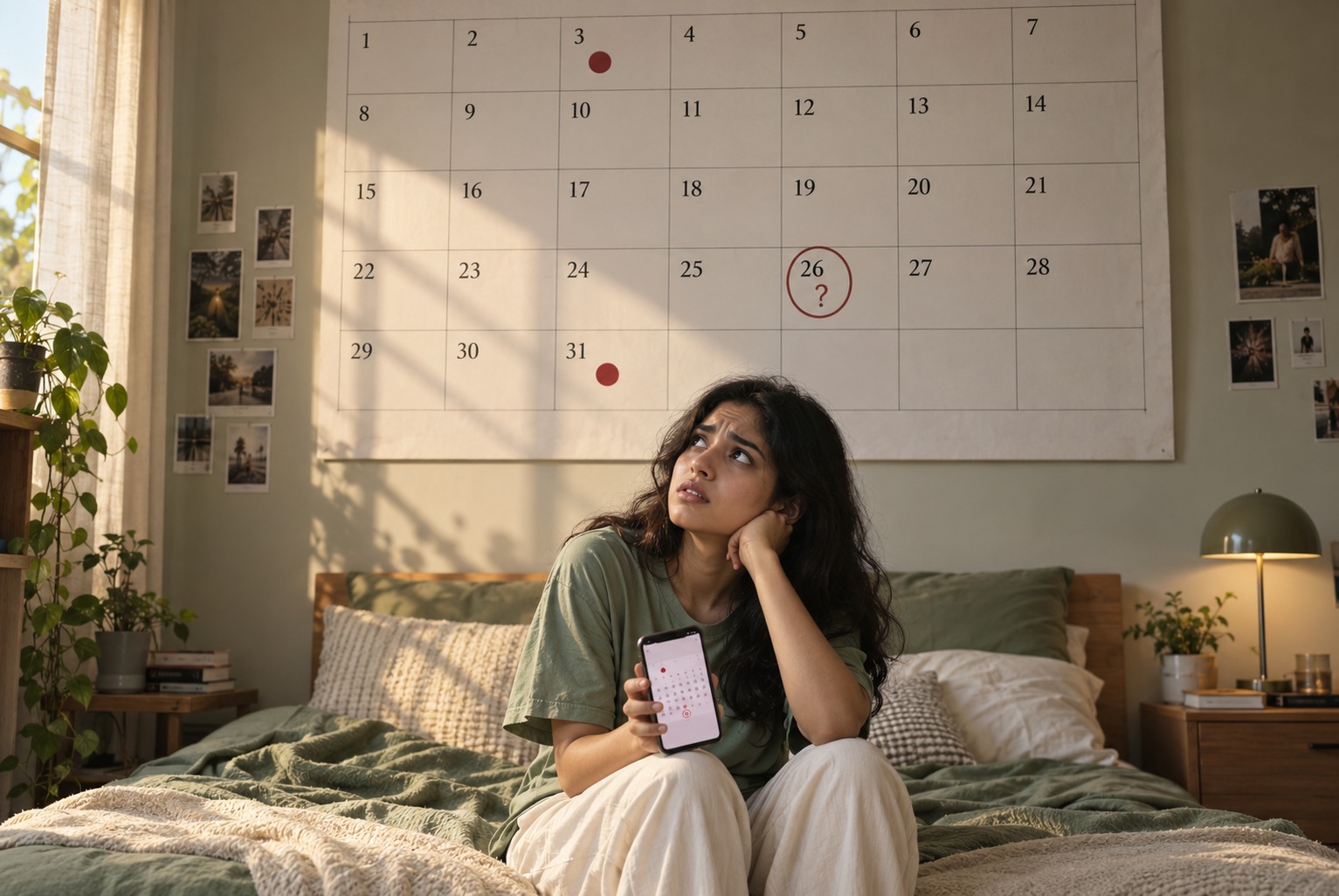
You’ve counted the days twice. You’ve scrolled back through your phone to check when it last came. And somewhere under all that counting is a small, steady worry you haven’t said out loud to anyone.
Here’s what nobody tells you early enough: irregular periods are extremely common, and most causes are ordinary and treatable. But "common" isn’t the same as "ignore it." Let’s get into it.
01 / What counts as an irregular period, exactly?
The goalposts are wider than most women assume. The NHS puts the average cycle at 28 days, with 21 to 35 days considered normal — a few days’ variation each month isn’t irregular at all. Cleveland Clinic draws the line at cycles under 21 days or over 35, three or more missed periods in a row, or flow noticeably heavier or lighter than usual for you.
So a period four days late is unremarkable, and a 33-day cycle when your friend has 27 isn’t a problem. The word doing the work is your.
02 / The hormones behind the change
Your cycle runs on a conversation between your brain and your ovaries. Interrupt it and ovulation is delayed or skipped — no ovulation, no period on schedule. That’s the whole mechanism:
• Pregnancy. Rule it out with a test, then move on. Many women stay stuck here while the real cause goes unexamined.
• Stress. Sustained stress raises cortisol, which suppresses the brain signals that trigger ovulation. Clinically it’s functional hypothalamic amenorrhoea.
• Weight change and contraception. Ovulation costs energy, so rapid weight loss deprioritises it. The pill, injection, implant and IUS also cause lighter or absent periods.
• Puberty and perimenopause. Expected in the first two years after periods start, and again in your forties. More in our puberty-to-menopause guide.
03 / The two causes most missed in India
PCOS is the leading medical cause here, and badly under-diagnosed. A study of 9,824 Indian women published in JAMA Network Open found prevalence of 7.2 per cent by NIH criteria and 19.6 per cent by Rotterdam criteria. Watch for long or absent cycles alongside jawline acne, unwanted hair growth, hair thinning or stubborn weight gain.
Thyroid is the other, and the easiest to check. A Delhi tertiary-care study found 44 per cent of women with menstrual disorders had thyroid dysfunction. A basic TSH test is cheap and treatment is usually straightforward. If late periods come with fatigue, hair fall or weight change, ask for it by name.
04 / When to see a doctor
Book an appointment if any one of these applies. You don’t need all of them, and you’re not wasting anyone’s time:
• Three or more missed periods with pregnancy ruled out.
• Cycles consistently under 21 days or over 35.
• Regular periods that suddenly turned irregular, especially under 45.
• Bleeding between periods, after sex, or after menopause.
• Very heavy bleeding or severe pain — soaking a pad hourly, large clots, bleeding beyond seven days, or pain that stops you working or sleeping.
Take your tracked dates with you. The NHS recommends an app or diary — memory is unreliable and worry exaggerates.
05 / What Femi9 pads are made of (and why it matters when your cycle is unpredictable)
Finding the cause takes time. Meanwhile there’s a smaller, solvable problem: you can’t prepare for a period you can’t predict, so you wear protection on days you’re not sure you need it. That makes material matter more, not less:
• Breathable cottony top layer over pure surgical cotton — medical-grade cotton against your skin, so just-in-case wear doesn’t leave it sore.
• 9 smart layers, 4X absorption — fluid is pulled off the surface and locked away, so a sudden heavy day is covered.
• Leakage-free, rash-free, chemical-free — no chlorine bleaching, dyes or fragrance. More in our rash-free pads guide.
• Daily-use gentle, fully biodegradable — mild enough for spotting on in-between days.
Keep a range, not one size: 180mm minis for uncertain days, 290mm Large for regular flow, 330mm XL for the heavy day that turns up unannounced. Keep a 3-pad pack in your bag and a 3-pad XL at your desk, and the emergency stops happening.
06 / Irregular period FAQs
Why is my period late if I’m not pregnant?
Most often stress, PCOS, thyroid dysfunction, weight change, hormonal contraception, perimenopause or a recent illness. One late period is rarely a concern; a pattern is worth investigating.
How many days delay in periods is normal?
Up to about a week is normal variation, and cycles of 21 to 35 days are normal. Three consecutive missed periods, or cycles regularly outside that range, warrant a doctor.
Can stress really delay a period?
Yes. Cortisol suppresses the signals that trigger ovulation. Exam season, bereavement, a punishing job — even happy stress like a wedding — can push a cycle back.
Does an irregular cycle mean I can’t get pregnant?
Not on its own. Irregular cycles make ovulation harder to time, but many women with them conceive. Trying a year without success — six months if you’re over 35 — warrants a doctor.
Can irregular periods be cured?
Usually managed, often resolved, once the cause is found. Thyroid responds to medication, stress-related cycles return when the stressor eases, and PCOS is manageable. Diagnosis is the step that matters.
Do irregular periods affect sleep and mood?
Often, yes — the same hormone shifts affect sleep and mood. More in sleep and women’s hormones and in period mood swings.
The takeaway
Your cycle is information, not a verdict. Sometimes it’s telling you this month was hard. Sometimes it’s pointing at something specific and treatable.
Either way, you’re allowed to ask. Write the dates down, take them to a doctor, expect to be taken seriously. While you work it out, Femi9 makes organic cotton, chemical-free sanitary pads — breathable, rash-free, and there whenever your period turns up.
Related reading on Femi9.in
• Rash-Free Pads for Periods: Because Day Two Shouldn’t Hurt — why irritation happens and how to stop it.
• Sleep and Women’s Hormones — how cycle hormones change the way you sleep.
• From Puberty to Menopause — what changes at each stage, and when.
• Best Sanitary Pads for Summer Heat — staying rash-free with a heavy flow.
• Buy Best Sanitary Napkins Online — sizing, materials and what to look for.
• Long Workdays, Heavy Flow & Irritation — period comfort when your day doesn’t pause.
• Best Biodegradable Sanitary Pads — disposal, materials and affordable options.
• Femi9 FAQs, About Femi9 and contact us.
External references
late period is causing real distress, or worry about your body has started affecting daily life, please talk to someone you trust or call Tele-MANAS, the Government of India’s free 24×7 mental health helpline, on 14416.
This article is informational only. It is not medical advice and does not replace a consultation with your doctor. If you have gynaecological or medical concerns, please consult a physician.
• NHS — Irregular Periods: https://www.nhs.uk/symptoms/irregular-periods/
• NHS — Periods and Fertility in the Menstrual Cycle: https://www.nhs.uk/conditions/periods/fertility-in-the-menstrual-cycle/
• Cleveland Clinic — Irregular Periods (Abnormal Menstruation): https://my.clevelandclinic.org/health/diseases/14633-abnormal-menstruation-periods
• JAMA Network Open (2024) — PCOS Prevalence Among Indian Women: https://www.ncbi.nlm.nih.gov/pmc/articles/PMC11581580/
• J Obstet Gynaecol India — Thyroid Dysfunction in Menstrual Disorders, Delhi: https://link.springer.com/article/10.1007/s13224-014-0650-0
• Endocrine Society — Functional Hypothalamic Amenorrhea Guideline: https://academic.oup.com/jcem/article/102/5/1413/3077281
• World Health Organization — Menstrual Health: https://www.who.int/health-topics/menstrual-health
• Tele-MANAS, Government of India (14416): https://telemanas.mohfw.gov.in/